
 Contact Us
 Home / /
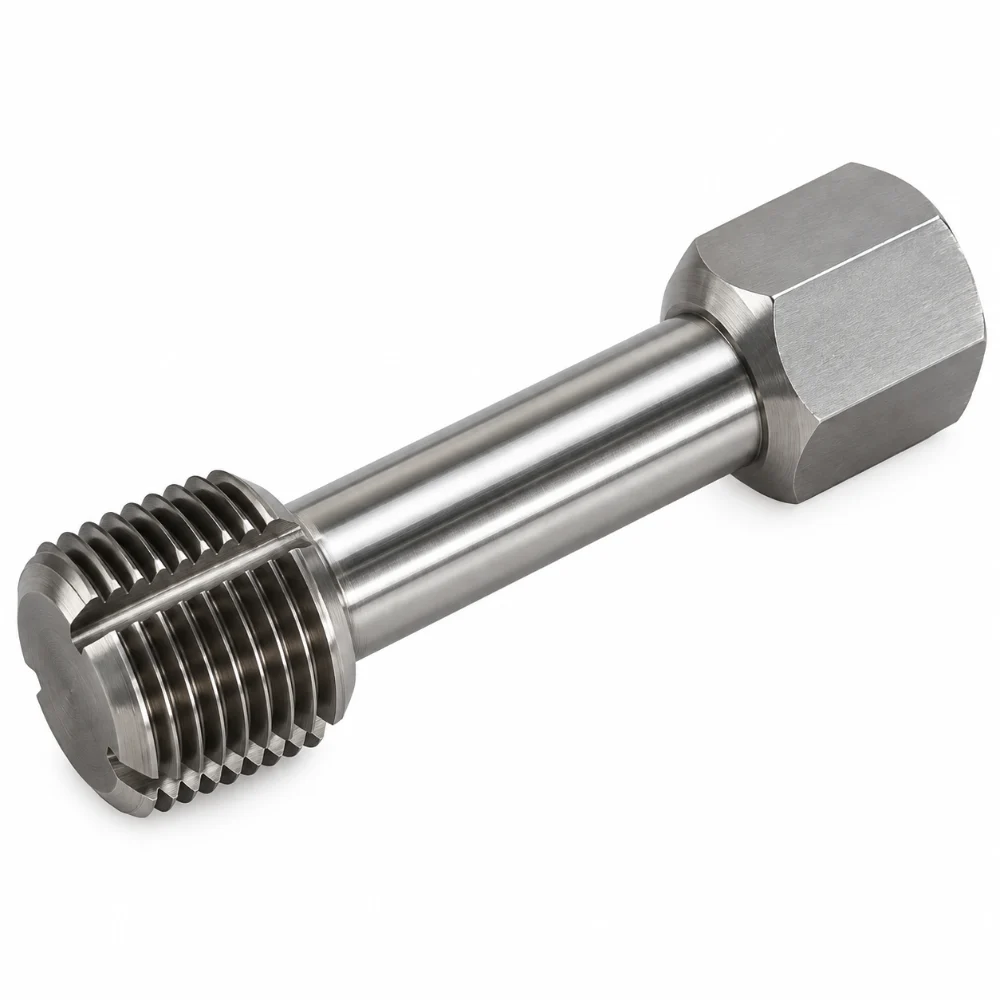
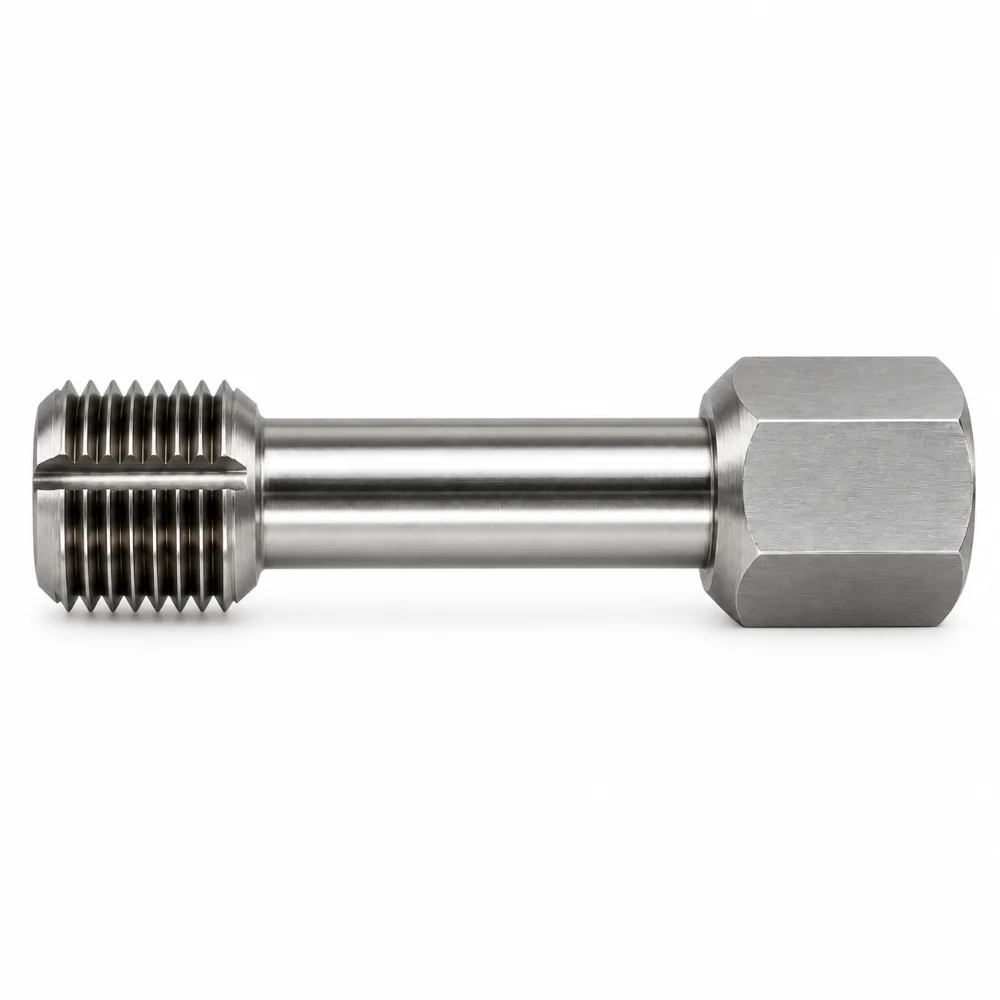
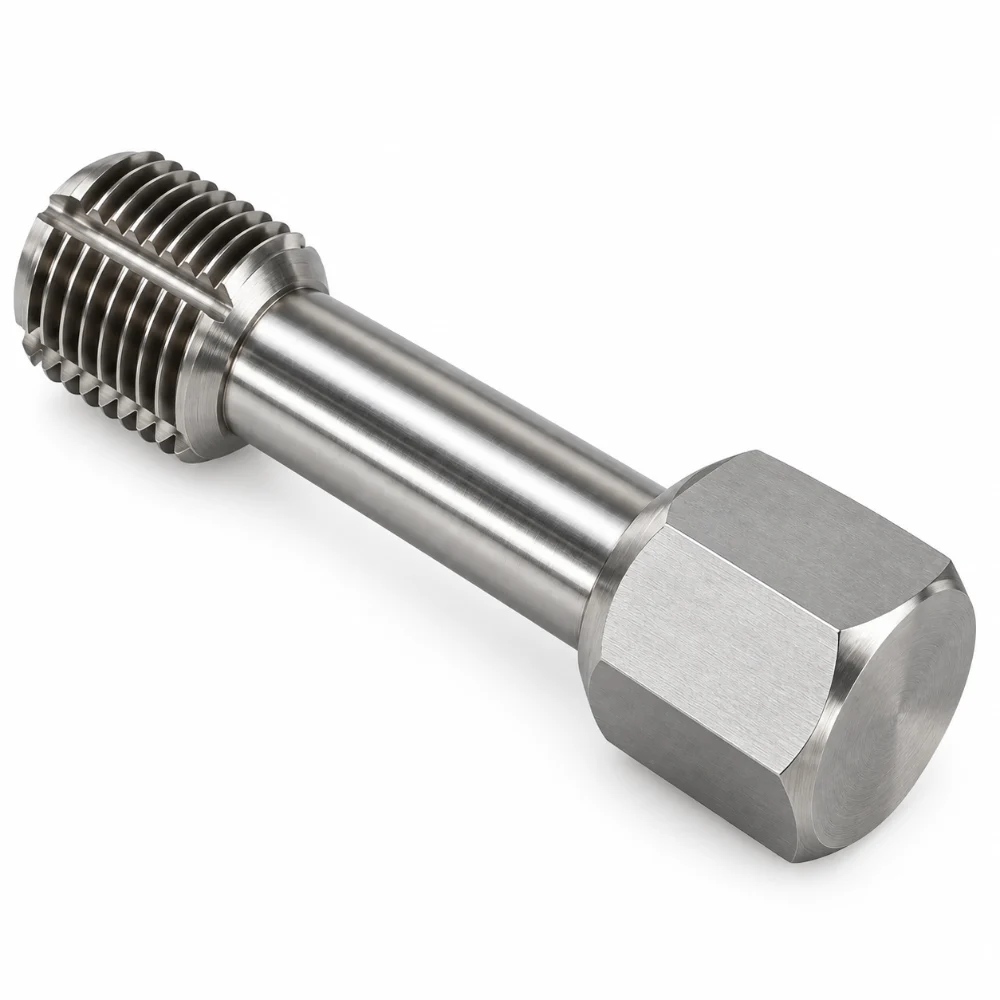


Thread Chaser Tool – Precision CNC Machined Tool Steel Component
This Thread Chaser Tool is a custom precision-machined component designed for maintaining external threads on specialized micro nozzle equipment. The tool features a hexagonal head, an elongated cylindrical shaft, and a threaded working end with four equally spaced longitudinal channels.
Manufactured using precision CNC turning, threading, and milling processes, the component has an overall length of 3.750 inches (95.25 mm). Its working end features a 7/8-14 UN-2A external thread, while the drawing specifies S7 or A2 tool steel as material options. The design requires accurate thread geometry, controlled channel positioning, and careful attention to the thread starting point.
-
Product Name: HL Micro Nozzle Thread Chaser
-
Material: A2 Tool Steel (S7 also specified as an alternative)
-
Manufacturing Process: CNC Turning, Thread Cutting, Milling and Slotting
-
Overall Length: 95.25 mm (3.750″)
-
Shaft Diameter: Ø12.70 mm (0.500″)
-
Hex Head: 13/16″
-
External Thread: 7/8-14 UN-2A
-
Threaded Section Length: 19.05 mm (0.750″)
-
Thread Channels: Four, spaced at 90° intervals
-
Surface Roughness: Ra 3.2 μm (production specification)
-
Application: Micro Nozzle Thread Maintenance
-
Production Type: Custom Precision Machined Tooling
 Get Free Quote


What Makes This Thread Chaser Different from an Ordinary Bolt?
At first glance, the component resembles a long steel fastener with a hexagonal head. However, the working end reveals its actual purpose.
Unlike a conventional threaded bolt, this tool incorporates four longitudinal channels distributed around the threaded section.
These channels interrupt the external thread profile, creating edges that can assist in clearing debris and addressing minor thread damage during maintenance.
The hexagonal head allows engagement with a suitable wrench, while the smooth cylindrical shaft connects the driving section to the working end.
The result is a specialized maintenance tool rather than a standard fastening component.
The Critical Detail: Aligning the Channels with the Thread Start
The most distinctive manufacturing requirement is not the overall length or the hexagonal head.
It is the angular relationship between the longitudinal channels and the start of the external thread.
The engineering drawing explicitly requires the first channel to be aligned with the thread starting position.
This introduces an additional machining challenge because the rotational position of the threaded profile must be coordinated with the subsequent channel-cutting operation.
For this project, the key geometric requirements include:
| Feature | Drawing Specification |
|---|---|
| External Thread | 7/8-14 UN-2A |
| Threaded Length | 0.750″ ±0.015″ |
| Thread Pitch | 0.0714″ |
| Channel Arrangement | 4 × 90° |
| Channel Corner Radius | R1/32″, 4 locations |
| Thread Start | First channel aligned with thread start |
| Thread Major Diameter | 0.863″–0.873″ |
| Thread Pitch Diameter | 0.822″–0.827″ |
The channel orientation must therefore be treated as a functional machining requirement, not simply a decorative groove pattern.
Manufacturing the Thread Chaser from Tool Steel
The component combines rotational machining with features requiring indexed secondary operations.
Its long cylindrical shaft and threaded end are suitable for CNC turning, while the hexagonal driving head and longitudinal channels require additional profile machining.
A practical manufacturing plan involves several closely related operations.
Turning the main shaft
The cylindrical section has a nominal diameter of 0.500 inches. Maintaining its geometry provides a consistent reference between the hexagonal head and the threaded working end.
Producing the external thread
The 7/8-14 UN-2A thread requires controlled machining of the thread profile, including major diameter, pitch diameter, and thread length.
Machining the longitudinal channels
Four channels are positioned around the working end at 90-degree intervals. Their angular orientation must be coordinated with the thread starting location.
Finishing the hexagonal head
The 13/16-inch hexagonal section provides the driving feature for engaging the tool with suitable equipment.
The exact machining sequence should be established according to the chosen material condition, tooling, and inspection requirements.
Tool Steel Selection and Hardness Considerations
Material selection is particularly important for a thread chaser because its working surfaces may repeatedly contact existing steel threads.
The engineering drawing identifies S7 tool steel with an HRC 52–58 hardness requirement, or A2 tool steel as an alternative.
The production specification lists A2 tool steel.
Both materials are used in tooling applications, but they offer different characteristics.
S7 is commonly selected for applications that require impact toughness, while A2 offers useful wear resistance and dimensional stability when properly heat-treated.
For this component, the final material condition must support the intended thread maintenance function.
Hardness verification, dimensional inspection, and appropriate treatment requirements should be confirmed against the approved manufacturing specification.
How Does the Four-Channel Design Support Thread Maintenance?
A thread chaser is generally intended to restore or clean an existing thread rather than create an entirely new thread in solid material.
The longitudinal channels provide spaces where removed debris or small amounts of displaced material may collect during operation.
They also create interrupted thread edges that can assist in addressing minor burrs or localized thread damage.
For the micro nozzle application, the design combines three functional elements:
- A hexagonal head for controlled rotational engagement.
- An elongated shaft for reaching the working area.
- A channeled threaded end for contacting the existing thread profile.
Correct thread compatibility remains essential. A thread chaser should not be used to force engagement with an incompatible or severely damaged thread.
Inspection Priorities for the Finished Tool
This project requires more than checking whether the component resembles the engineering drawing.
Thread geometry and channel positioning are particularly important because they determine whether the working end is suitable for its intended mating thread.
| Inspection Feature | Recommended Verification |
|---|---|
| Overall Length | Dimensional measurement against 3.750″ ±0.015″ |
| Shaft Diameter | Measurement against Ø0.500″ ±0.015″ |
| Hexagonal Head | Across-flats and section-length inspection |
| External Thread | Verification of specified 7/8-14 UN-2A geometry |
| Thread Channels | Count, angular spacing and profile inspection |
| Channel Alignment | Confirm first channel position relative to thread start |
| Material Condition | Material identification and applicable hardness verification |
| Surface Condition | Check for burrs, damage and machining defects |
The finished product photographs show multiple matching components with polished-looking cylindrical surfaces, hexagonal driving heads, and clearly defined threaded channels.
However, inspection records are needed to confirm dimensional acceptance, hardness, and thread conformity.
A drawing-based quality control process helps establish the appropriate checks before the tool is released for use.
Why This Project Matters for Custom Tool Manufacturing
This case demonstrates an important distinction in precision machining: some of the most demanding features are not necessarily the smallest dimensions.
A relatively straightforward cylindrical component can require additional manufacturing control when a thread profile must maintain a defined angular relationship with another feature.
For this Thread Chaser Tool, the combination of a 7/8-14 external thread, four indexed channels, a long shaft, and a hexagonal driving head creates a specialized production requirement.
Similar machining principles may apply to custom thread repair tools, maintenance tooling, nozzle service tools, and other engineered threaded components.
Frequently Asked Questions
What is a Thread Chaser Tool used for?
A Thread Chaser Tool is used to clean or restore compatible existing threads, particularly when minor burrs, debris, or localized damage interfere with normal thread engagement.
What is the difference between a thread chaser and a thread cutting die?
A thread chaser is primarily used for maintaining an existing thread. A thread cutting die is designed to produce external threads by removing material from a suitable workpiece.
Why are there four channels on this tool?
The four longitudinal channels interrupt the threaded profile and provide spaces for debris or small amounts of removed material. Their spacing and alignment follow the specified tool geometry.
Why is A2 tool steel suitable for precision tooling?
A2 tool steel can provide good wear resistance and dimensional stability after appropriate heat treatment, making it useful for various machined tooling components.
Can CNC machining produce customized thread chaser tools?
Yes. CNC turning and threading can produce the main cylindrical features, while indexed milling operations can create longitudinal channels and other specialized geometry.
What specifications are needed when ordering a custom thread chaser?
Important details include thread standard, diameter, pitch, class of fit, working length, channel geometry, material, hardness requirements, and inspection criteria.