
 Contact Us
  Home / CNC Machining /
 5-Axis CNC Machining for Complex Parts
Produce complex multi-surface and compound-angle parts in a single setup — eliminating re-fixturing errors common in 3-axis machining.
-
 Tolerances to ±0.005mm on critical dimensions
 -
Simultaneous 5-axis machining, not 3+2 positioning
-
Complex curved surfaces, undercuts, multi-face features in one setup
-
From single prototype to 500-piece
-
Full DFM support
 Get Free Quote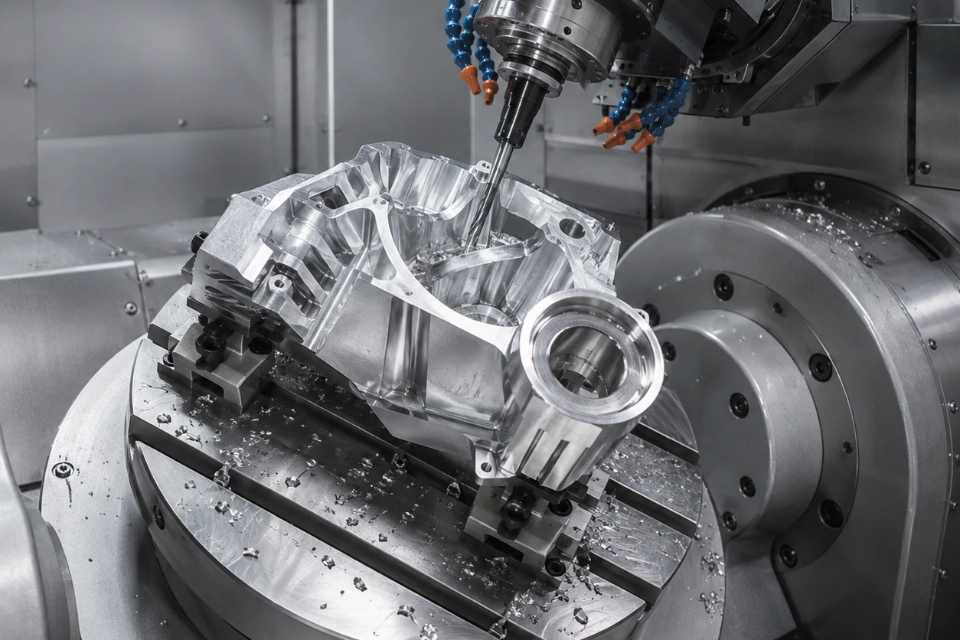
When Does a Part Require 5-Axis Machining?
5-axis CNC machining is recommended when a component includes complex surfaces, multiple machining faces, angled features, or geometries that would require several setups on a conventional 3-axis machine.
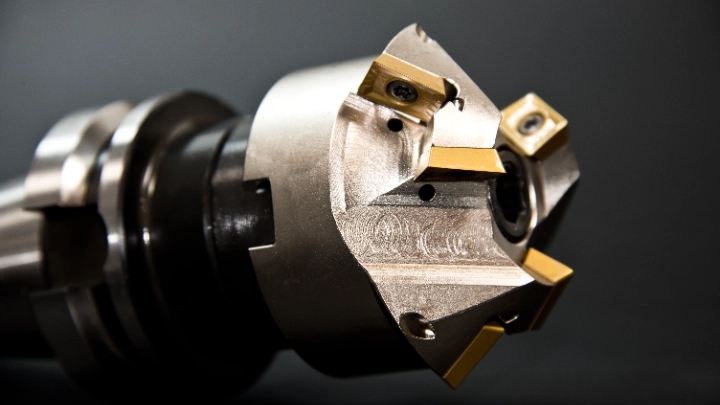
Karry Precision reviews your drawings, material, tolerance requirements, and production volume to determine the most efficient machining process. Although 5-axis machining uses more advanced equipment, it can reduce setups, shorten cycle times, improve accuracy, and lower the overall production cost of complex parts.
Our 5-Axis Machining Capabilities
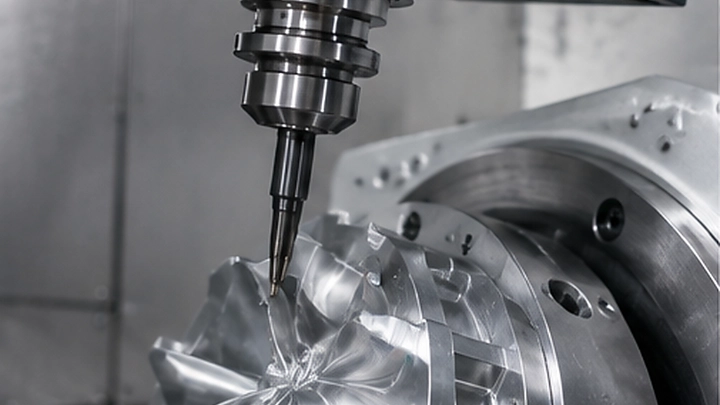
Advanced 5-Axis Machining
Karry Precision performs milling, drilling, tapping, contouring, and angled-hole machining in a single setup. Fewer part repositioning operations help improve dimensional accuracy, feature alignment, and production repeatability for complex components.
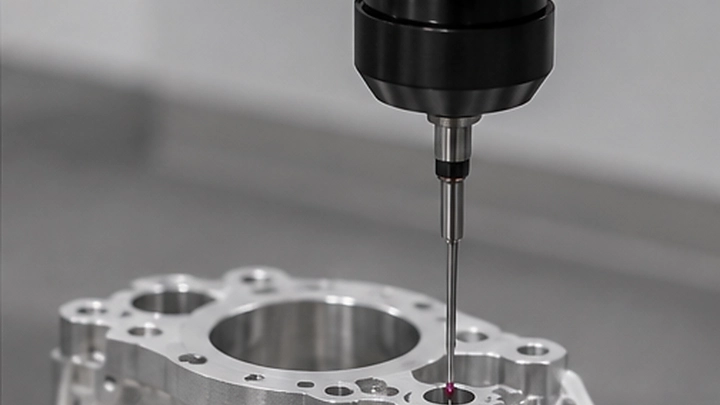
Precision Programming
Our engineering team develops optimized, collision-free toolpaths based on the part geometry, material, and tolerance requirements. Complex machining operations are simulated before production to reduce programming risks and improve first-part accuracy.
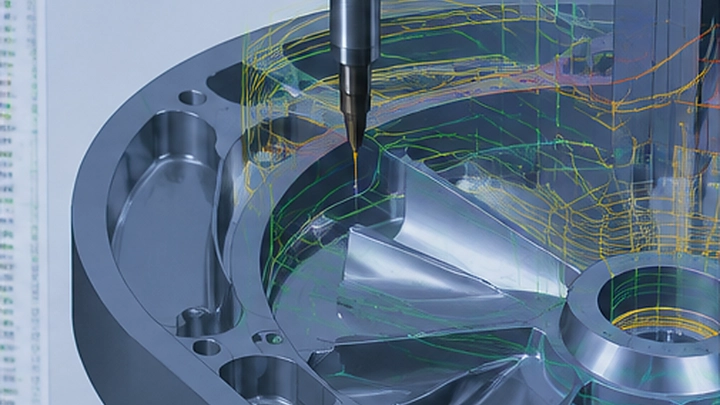
DFM and Quality Inspection
We review your drawings before machining to identify potential manufacturing risks, optimize the process route, and recommend practical design adjustments. Critical dimensions can be verified through CMM inspection, with dimensional reports available according to project requirements.
Our Typical 5-Axis Machined Components
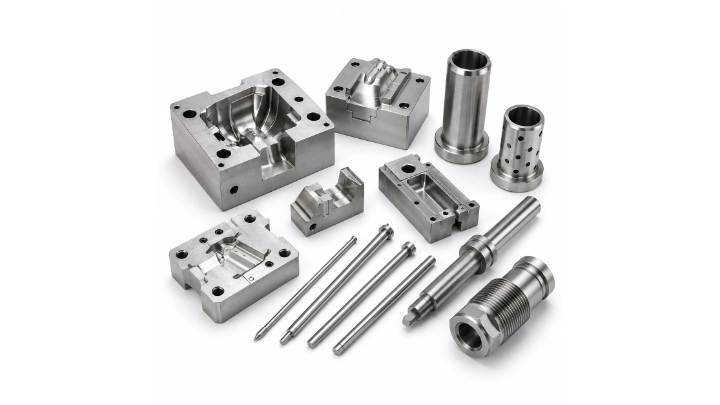
Mold Inserts & Precision Tooling
Core inserts, cavity blocks, forming dies, electrodes, and custom fixtures
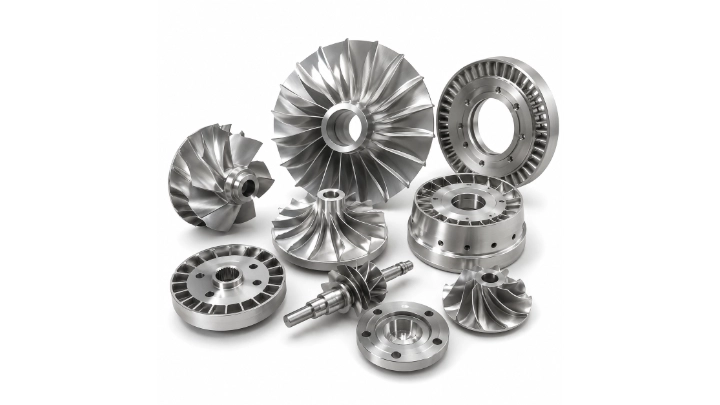
Impellers & Turbine Components
Impellers, turbine blades, rotors, fan components, and curved-flow parts
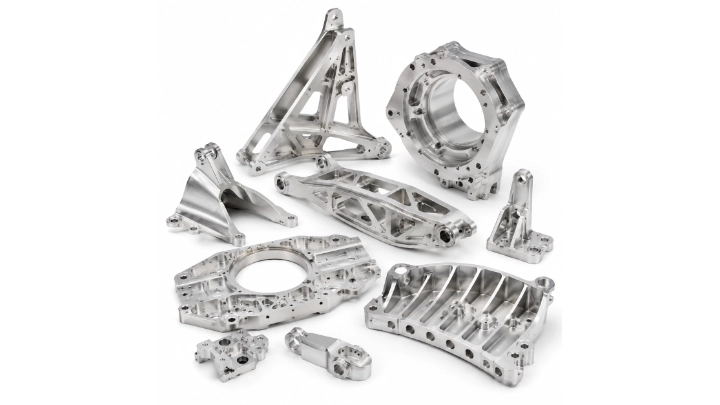
Aerospace & Structural Components
Brackets, housings, engine mounts, structural frames, and complex aluminum parts
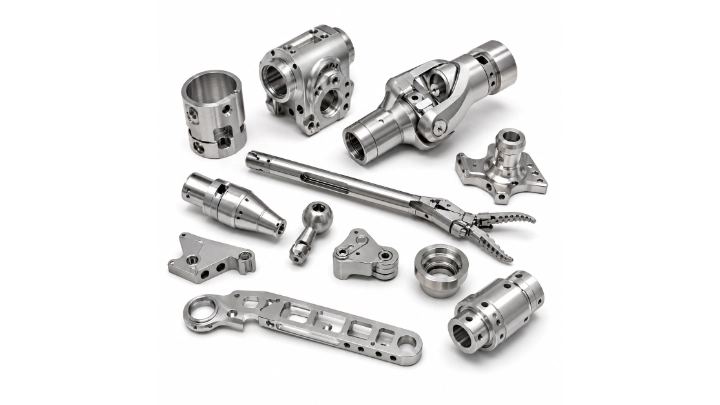
Medical & Robotic Components
Surgical instrument parts, prosthetic components, robotic joints, and precision housings
Materials & Surface Finishes for 5-Axis Machining
| Material Category | Common Grades | Key Characteristics | Typical Applications |
| Aluminum | 6061, 6082, 7075, 2024 | Lightweight, corrosion-resistant, and easy to machine | Aerospace brackets, housings, fixtures, and prototypes |
| Stainless Steel | 303, 304, 316, 17-4PH | Strong, corrosion-resistant, and suitable for demanding environments | Medical parts, valves, tooling, and precision components |
| Carbon & Alloy Steel | 1018, 1045, 4140, 4340 | High strength, wear resistance, and good mechanical performance | Shafts, molds, machine components, and industrial tooling |
| Titanium | Grade 2, Grade 5 | High strength-to-weight ratio, heat resistance, and biocompatibility | Aerospace, medical, and high-performance components |
| Copper & Brass | C110, C360, H59, H62 | Excellent electrical and thermal conductivity | Electrical parts, connectors, electrodes, and fittings |
| Engineering Plastics | POM, PEEK, PC, PTFE, Nylon | Lightweight, insulating, chemical-resistant, and low-friction | Medical devices, insulators, guides, and functional prototypes |
| Surface Finish | Applicable Materials | Main Benefits | Typical Applications |
| Anodizing | Aluminum | Improves corrosion resistance, hardness, and appearance | Housings, brackets, panels, and consumer products |
| Hard Anodizing | Aluminum | Provides increased wear resistance and surface hardness | Aerospace, automotive, and industrial components |
| Powder Coating | Aluminum and Steel | Durable, corrosion-resistant, and available in multiple colors | Frames, housings, covers, and outdoor parts |
| Electroplating | Steel, Brass, and Copper | Improves corrosion resistance, conductivity, and appearance | Connectors, fasteners, and decorative components |
| Electroless Nickel Plating | Aluminum and Steel | Provides uniform coating, wear resistance, and dimensional stability | Precision parts, molds, valves, and tooling |
| Passivation | Stainless Steel | Removes surface contaminants and improves corrosion resistance | Medical, food-processing, and chemical components |
| Polishing | Metals and Plastics | Improves smoothness, appearance, and surface cleanliness | Medical parts, decorative parts, and optical components |
| Bead Blasting | Aluminum, Stainless Steel, and Titanium | Creates a uniform matte texture and removes machining marks | Housings, panels, and visible components |
| Brushing | Aluminum and Stainless Steel | Produces a consistent directional texture | Panels, covers, and decorative components |
| Black Oxide | Carbon and Alloy Steel | Provides mild corrosion resistance and a dark finish | Tools, fixtures, fasteners, and machine parts |

Whether you're in aerospace, automotive, medical, or consumer electronics, our advanced technology and expert team are here to deliver high-quality, precise components that exceed your expectations.

5-Axis Machining Tolerance Guide
Precision is essential in 5-axis CNC machining, particularly for components with complex contours, angled features, and tight relationships between multiple surfaces. At Karry Precision, tolerances are evaluated according to part function, geometry, material properties, feature accessibility, surface finish, and inspection requirements.
Tolerance Design Recommendations
- Apply tight tolerances only to function-critical dimensions
- Use standard tolerances for non-critical features
- Simplify deep cavities, undercuts, and complex internal geometries
- Maintain consistent wall thickness to reduce deformation
- Provide suitable tool access and internal corner radii
- Consider thermal expansion and material movement during machining
| Tolerance Category | Typical Tolerance | Common Materials | Cost Impact | Machining Considerations |
| General Linear Dimensions | ±0.05 mm | Aluminum 6061, 7075; Brass | Low to Medium | Suitable for most complex features and standard production parts |
| Precision Linear Dimensions | ±0.02–0.05 mm | Aluminum, Stainless Steel 304/316, Tool Steel | Medium to High | Requires stable workholding, precision tooling, and in-process inspection |
| High-Precision Dimensions | ±0.01–0.02 mm | Aluminum, Stainless Steel, Titanium | High | May require finishing passes, temperature control, and CMM verification |
| Complex Surface Profiles | ±0.03–0.05 mm | Aluminum, Steel, Titanium | Medium to High | Accuracy depends on tool orientation, cutter size, surface curvature, and programming |
| Angled Holes and Multi-Face Features | ±0.03–0.05 mm | Metals and Engineering Plastics | Medium | Single-setup machining improves feature alignment and positional accuracy |
| Engineering Plastic Dimensions | ±0.05–0.10 mm | PEEK, POM, PC, PTFE, Nylon | Medium | Heat expansion, clamping pressure, and material deformation must be controlled |
| Copper and Brass Components | ±0.03–0.05 mm | Copper, Brass | Low to Medium | Good machinability, although copper may require optimized tooling to prevent burrs |
| Positional Accuracy | 0.02–0.05 mm | Aluminum, Steel, Stainless Steel, Titanium | Medium to High | Depends on datum strategy, machine calibration, setup stability, and inspection method |
The values above are general machining references. Final achievable tolerances depend on part size, geometry, material, feature depth, surface finish, production quantity, and inspection requirements.
Not sure about the right tolerance for your part?
Get Free Quote Our CNC 5-Axis Machining Process
-
 STEP 1
 Drawing Review
 -
 STEP 2
Material Preparation
STEP 2
Material Preparation -
 STEP 3
CNC Programming
STEP 3
CNC Programming -
 STEP 4
Machine Setup
STEP 4
Machine Setup -
 STEP 5
5-Axis Machining
STEP 5
5-Axis Machining -
 STEP 6
Quality Inspection
STEP 6
Quality Inspection
Common CNC 5-Axis Machining Questions