
 Contact Us
 Home / /


Stainless Steel Mounting Rail – Precision CNC Machining of a 1250 mm Rail
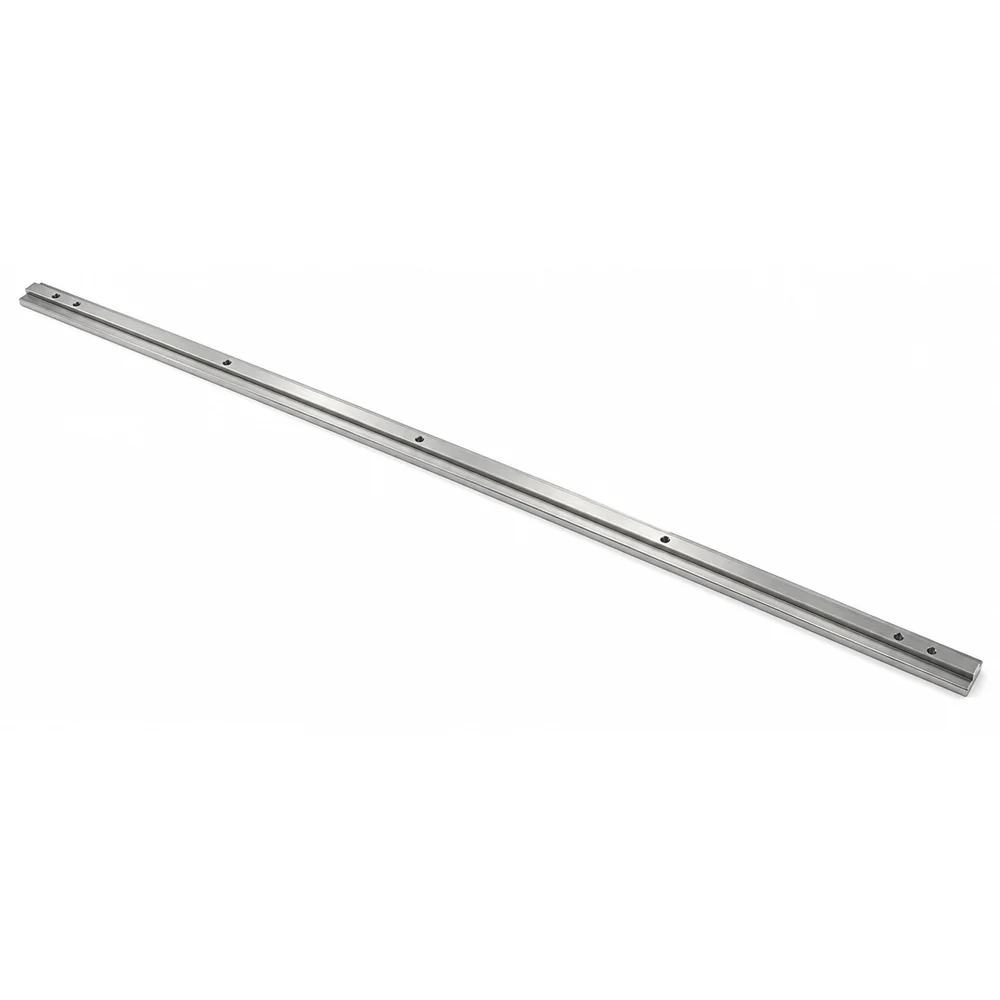
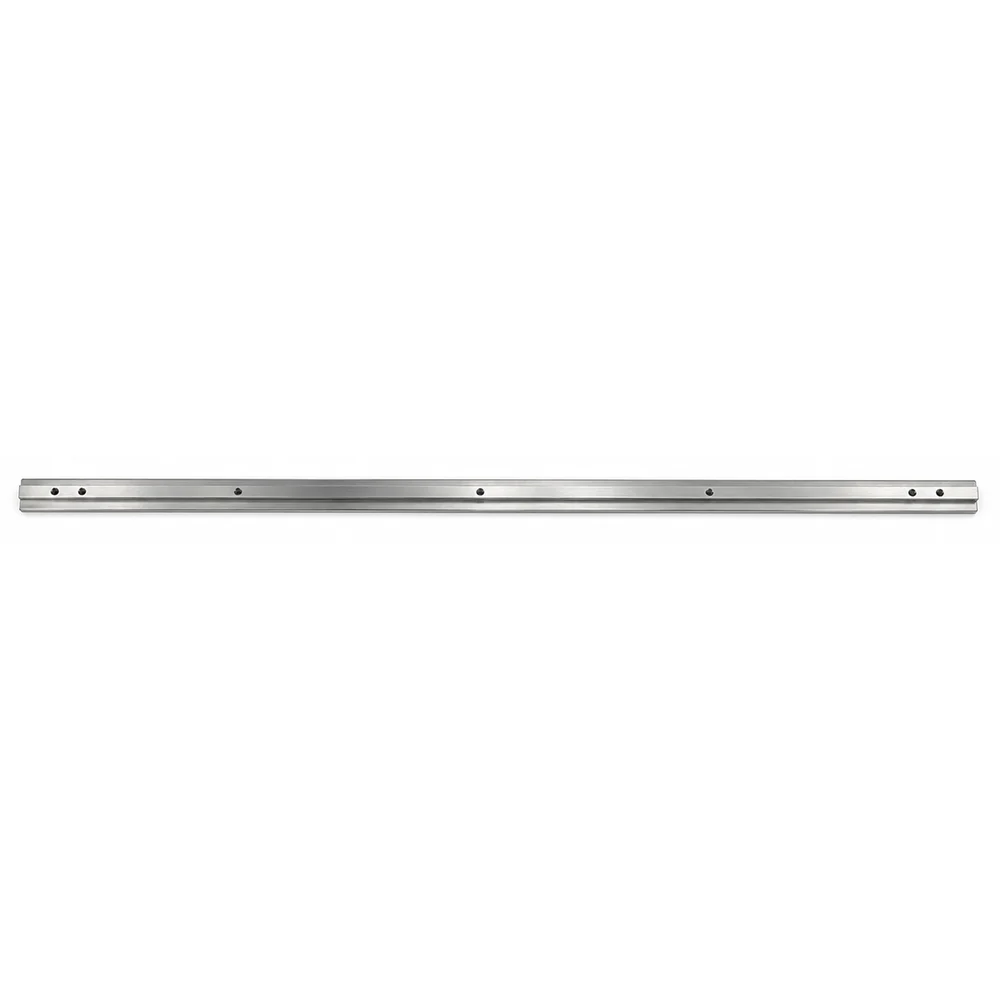
This Stainless Steel Mounting Rail is a custom precision-machined component designed for mechanical mounting and alignment applications. Its elongated structure incorporates a continuous machined profile and multiple mounting holes distributed along the rail.
Made from 303 stainless steel, the part measures 1250 mm in length with a narrow 22 mm width and 6.6 mm thickness. Its long, slender geometry requires careful control of workholding, straightness, machining stability, and hole positioning throughout production.
-
Product Name: Stainless Steel Mounting Rail
-
Material: 303 Stainless Steel
-
Manufacturing Process: CNC Milling, Drilling and Profile Machining
-
Overall Dimensions: 1250 × 22 × 6.6 mm
-
Precision Tolerance: ±0.004″ (±0.10 mm), project requirement
-
Surface Roughness: Ra 3.2 μm (125 μin)
-
Surface Treatment: Standard Machined Finish
-
Main Features: Longitudinal Machined Profile, Stepped Sections and Distributed Mounting Holes
-
Production Quantity: 5 Pieces
-
Production Type: Low-Volume Custom CNC Machining
 Get Free Quote


Why a 1250 mm Mounting Rail Requires a Different Machining Strategy
A short mounting plate can often be secured to a machine table with conventional clamping. A rail extending 1250 mm introduces additional considerations, particularly when its thickness is only 6.6 mm.
For this component, the machining approach must account for the relationship between the full-length profile and the individual mounting locations.
Even when each hole is produced within its specified dimensional tolerance, variations in rail straightness or cumulative hole positioning may affect assembly.
The engineering challenge is therefore not limited to machining individual features. It also involves maintaining a consistent reference along the entire workpiece.
Three areas deserve particular attention:
Longitudinal geometry: The machined profile should remain consistent from one end of the rail to the other.
Hole location consistency: Mounting features must be positioned according to their specified drawing coordinates without introducing excessive cumulative error.
Workpiece stability: Clamping and material removal must be managed to reduce unwanted bending, movement, or twisting during machining.
These considerations distinguish the project from conventional small CNC-milled brackets and plates.
Machining the Continuous Rail Profile
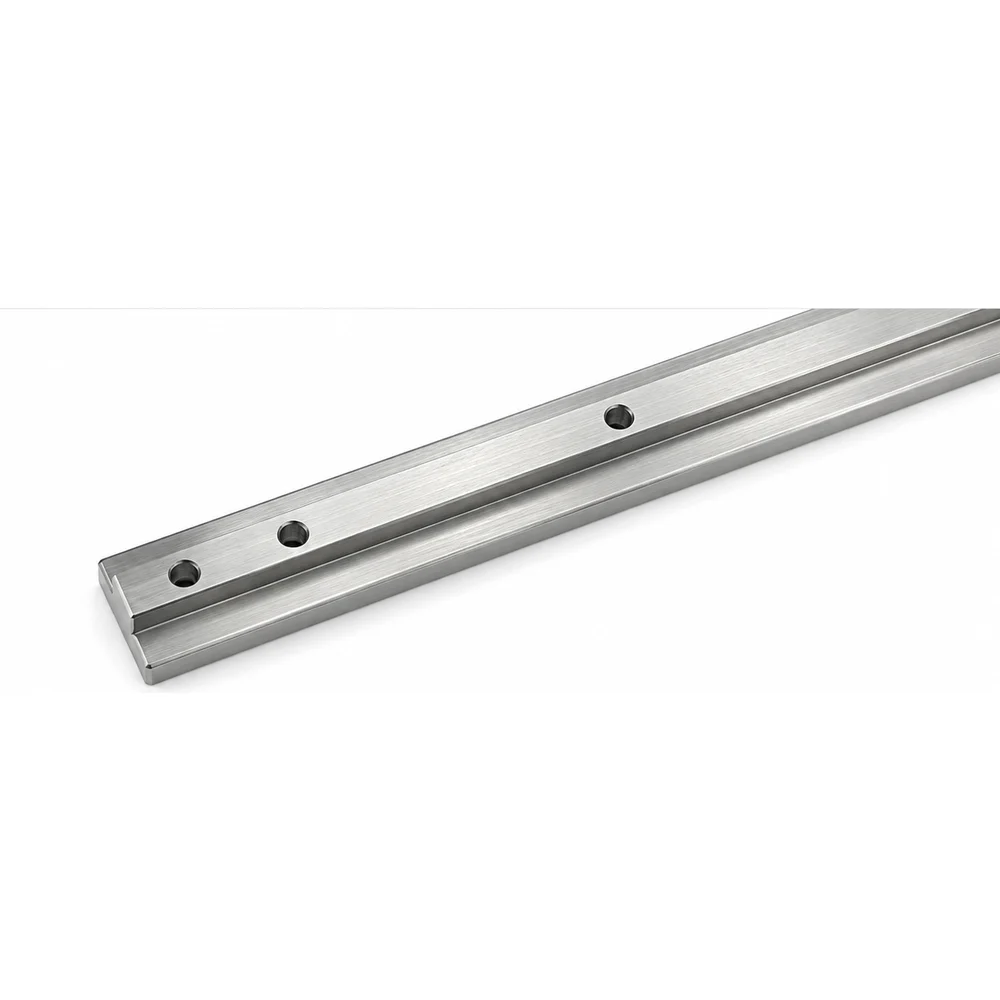
The product photographs show an elongated stainless steel strip with stepped longitudinal features and a series of mounting holes.
Unlike a simple flat bar, the profile contains distinct machined surfaces running along its length.
The relationship between these surfaces is important because it determines how the component interfaces with its mating structure.
A suitable manufacturing approach begins with establishing reliable reference surfaces and securing the workpiece with adequate support.
Longitudinal milling operations can then be planned to control the stepped geometry while limiting unnecessary material removal.
For a part of this length, the machining strategy must also consider tool engagement, machine travel, and the possibility of residual-stress-related movement.
Intermediate dimensional checks may be appropriate before proceeding to final hole machining.
Mounting Hole Accuracy Over an Extended Length
The mounting holes are distributed along the rail rather than concentrated in a single small area.
This arrangement creates a different inspection requirement from components with closely grouped holes.
The hole positions must be referenced to the intended drawing datums so that the completed rail can fit its mating assembly.
Where multiple locations are machined along a long workpiece, maintaining a consistent coordinate reference helps reduce cumulative positioning errors.
The holes also require controlled entry-edge finishing to prevent burrs from interfering with fasteners or adjacent contact surfaces.
Because the available drawing overview does not show every individual hole dimension, final drilling and threading requirements must follow the detailed feature callouts.
Technical Specifications
| Parameter | Specification |
|---|---|
| Product Name | Stainless Steel Mounting Rail |
| Drawing Reference | KRX-C1024674-527842 |
| Part ID | 599939 |
| Material | 303 Stainless Steel |
| Overall Length | 1250.0 mm |
| Overall Width | 22.0 mm |
| Overall Thickness | 6.6 mm |
| Manufacturing Method | Precision CNC Milling and Drilling |
| Precision Requirement | ±0.004″ (±0.10 mm) |
| Mounting Features | Multiple Holes Distributed Along Rail Length |
| Longitudinal Geometry | Continuous Stepped Machined Profile |
| Surface Roughness | Ra 3.2 μm / 125 μin |
| Surface Finish | Standard Machined Finish |
| Edge Requirements | Remove Burrs and Break Sharp Edges |
| Production Quantity | 5 Pieces |
| Inspection Documentation | Standard Inspection Report |
| Material Documentation | Certificate of Conformity and Material Certificate Required |
| Production Category | Low-Volume Precision CNC Machining |
Individual feature tolerances and the drawing's default dimensional tolerances take precedence where applicable.
The Importance of Supporting a Long, Narrow Workpiece
One of the most important manufacturing considerations for this component is its length-to-thickness relationship.
At 1250 mm long and 6.6 mm thick, the rail requires appropriate support during machining and inspection.
Excessive clamping pressure can influence the measured geometry, while insufficient support may allow the workpiece to deflect under cutting forces.
A suitable fixture should maintain access to the required machining features while supporting the rail at appropriate locations.
Careful control of machining forces and clamping conditions helps reduce unwanted movement.
The finished component should also be inspected in a condition that allows its actual geometry to be assessed without excessive fixture-induced distortion.
Why 303 Stainless Steel Was Selected
303 stainless steel is commonly used for precision-machined components because its sulfur-containing composition improves machinability compared with many conventional austenitic stainless steels.
For an elongated mounting rail, this characteristic can be useful when producing long machined surfaces and multiple mounting features.
The alloy also offers corrosion resistance suitable for many general industrial environments, although it is not the preferred choice for every highly corrosive application.
Material selection must therefore consider the operating conditions as well as machining requirements.
This project specifies a standard machined surface finish without an additional coating requirement.
Inspection Priorities for Long Stainless Steel Rails
The inspection strategy for this rail should focus on features that influence installation rather than relying only on its overall dimensions.
1. Overall Length and Cross-Section
Verify the specified length, width, and thickness according to the dimensional requirements.
2. Longitudinal Profile Consistency
Check the machined stepped surfaces at appropriate positions along the rail to identify variations in profile geometry.
3. Mounting Hole Locations
Inspect the mounting hole positions relative to the specified drawing references, particularly over the full 1250 mm length.
4. Straightness and Distortion
Assess the rail for bending or twisting that may affect assembly. Acceptance limits should follow the approved drawing or separately agreed functional requirements.
5. Surface and Edge Condition
Check for machining burrs, sharp edges, surface damage, and other visible defects. Surface roughness should be verified where required.
These checks are especially relevant when several rails are intended to fit the same mechanical assembly.
Production Considerations for a Five-Piece Batch
The documented production quantity for this project is five pieces.
At this volume, the main manufacturing considerations differ from those of high-volume standardized rail production.
Dedicated mass-production tooling may not be economical, making flexible CNC machining and reusable workholding more appropriate.
The machining plan should minimize unnecessary setups while preserving access to the rail's longitudinal features and mounting holes.
For repeated components, consistent machining references and inspection procedures help limit variation between individual parts.
This approach is suitable for custom mechanical components manufactured in small quantities according to specific engineering requirements.
Potential Applications of Stainless Steel Mounting Rails
Mounting rails with similar longitudinal profiles and hole arrangements may be used in several types of equipment.
Industrial Equipment Assemblies
Long fastening strips can provide mounting interfaces for machine frames, covers, and other mechanical components.
Automation Equipment
Custom stainless steel rails may serve as supporting or positioning elements in automated equipment, depending on their design and loading requirements.
Precision Fixtures
Machined rails with distributed mounting holes can be incorporated into fixtures requiring repeatable fastening locations.
Custom Mechanical Structures
Long stainless steel profiles may be specified where standard commercial mounting components do not meet the required dimensions or installation layout.
The actual application and load-bearing requirements must be determined by the complete equipment design.
Frequently Asked Questions
1. What is a stainless steel mounting rail?
A stainless steel mounting rail is an elongated mechanical component used to provide fastening or positioning interfaces within an assembly. Its profile, hole arrangement, and dimensions are determined by the equipment requirements.
2. Why is 303 stainless steel used for CNC-machined rails?
303 stainless steel offers good machinability and useful corrosion resistance for many industrial applications. It is often selected for components requiring substantial machining, although its suitability depends on the operating environment.
3. What makes machining a 1250 mm rail challenging?
Long rails require careful control of support, workholding, machining forces, and coordinate references. Maintaining profile consistency and accurate mounting hole positions over the entire length is especially important.
4. Can mounting hole patterns be customized?
Yes. Hole diameters, locations, spacing, and threading requirements can be customized according to an approved engineering drawing. The machining method depends on the required geometry and tolerances.
5. Can stainless steel mounting rails be manufactured in small quantities?
Yes. CNC machining supports prototype and low-volume production of custom mounting rails without necessarily requiring dedicated mass-production tooling. Production feasibility depends on material availability, machine capacity, part geometry, and inspection requirements.