
 Contact Us
 Home / /
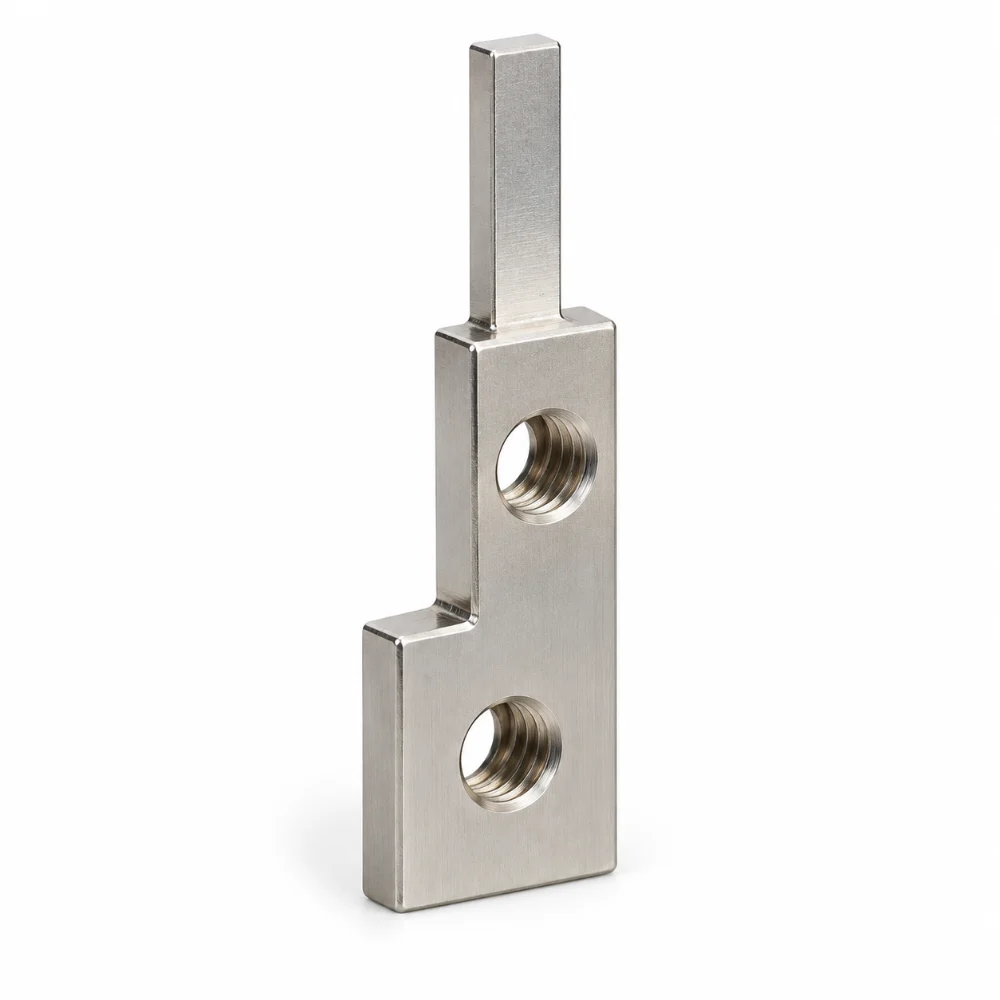
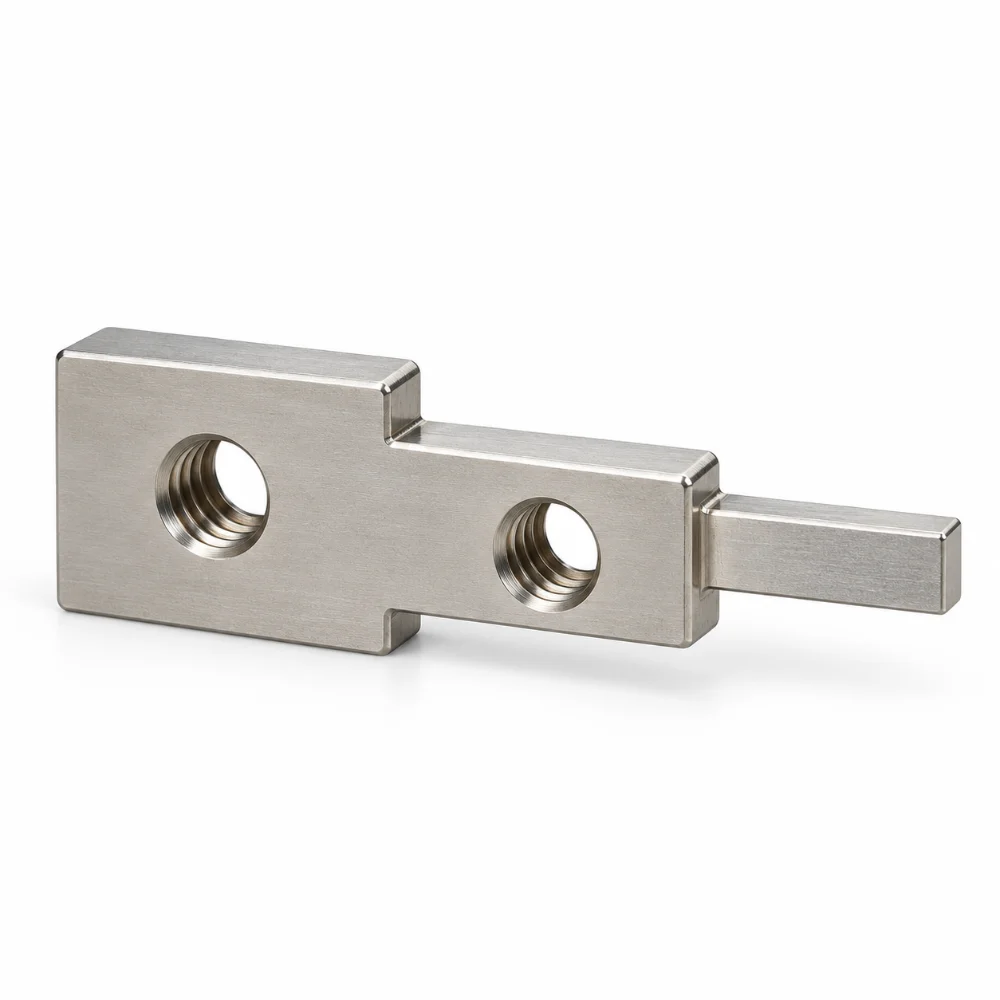
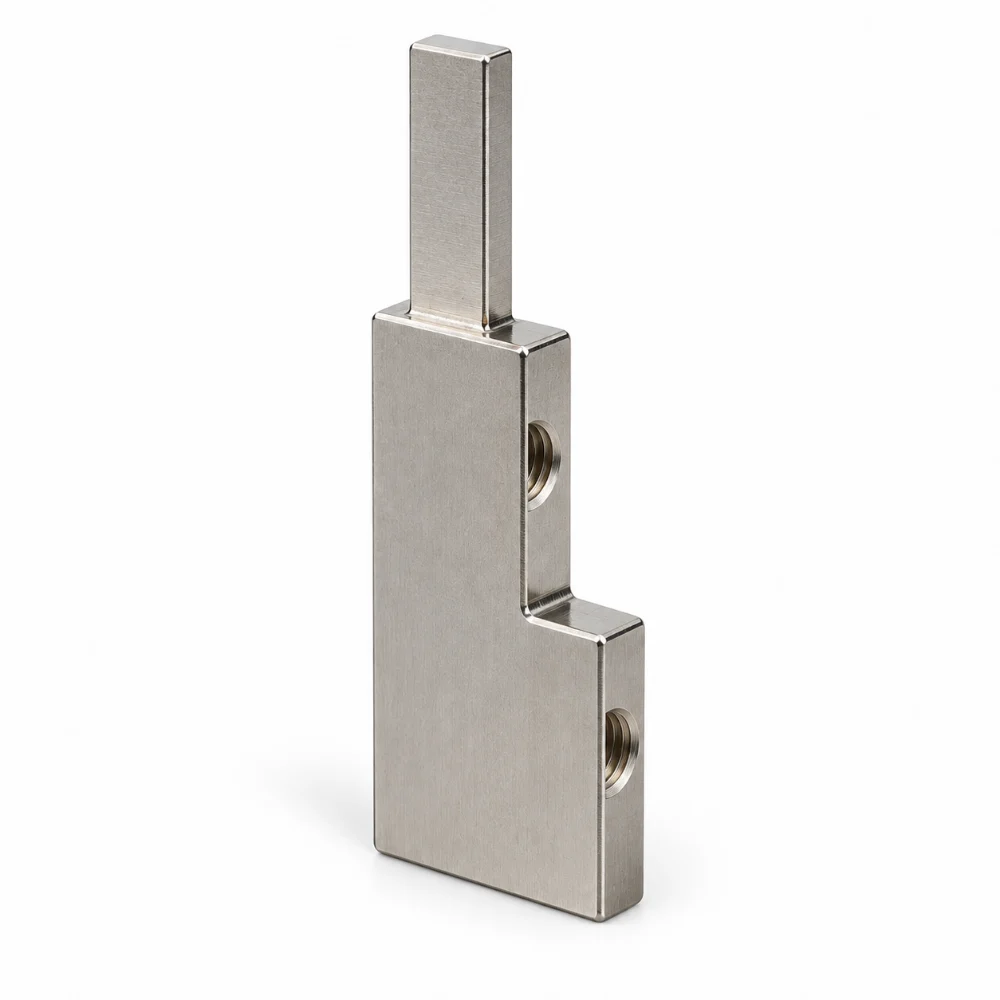


Silver Plated Electrical Terminal for Custom Tester Assembly
This Silver Plated Electrical Terminal is a custom precision-machined component manufactured from C954 aluminum bronze according to customer-supplied engineering drawings. Designed for a specialized tester assembly, the component combines a stepped metal body, two threaded mounting holes, and a silver-plated surface.
The terminal measures approximately 38.10 × 11.07 × 6.35 mm and features two 10-32 UNF threaded holes. Its manufacturing requirements include CNC milling, drilling, threading, and controlled surface finishing. The specified general tolerance is ±0.005″ (±0.13 mm), with a surface roughness requirement of Ra 3.2 μm.
-
Product Name: Custom Silver Plated Electrical Terminal
-
Material: C954 Aluminum Bronze
-
Manufacturing Process: CNC Milling, Drilling and Tapping
-
Overall Dimensions: 38.10 × 11.07 × 6.35 mm
-
Thread Specification: 10-32 UNF, 2 Places
-
General Tolerance: ±0.005″ (±0.13 mm)
-
Surface Roughness: Ra 3.2 μm
-
Surface Treatment: Silver Plating
-
Main Features: Stepped Profile, Two Threaded Holes and Narrow Terminal Extension
-
Drawing Application: Briggs Tester – Terminal Set 2
-
Inspection: Standard Inspection Report
 Get Free Quote


A Small Electrical Terminal with More Than One Job
At first glance, this component looks like a small machined metal block. However, its geometry suggests several distinct mechanical functions within the customer-defined tester assembly.
The wider section accommodates two threaded connections, while the narrower extension provides another interface within the component's overall geometry.
The stepped transitions establish different levels and sections along the part.
For manufacturing, these features must be considered together rather than treated as independent cuts.
A dimensional error in one area may influence how the terminal fits into its surrounding assembly, even when the remaining features meet their individual size requirements.
This makes the relationship between the threaded holes, machined faces, and external profile an important part of process planning.
Why the Customer Specified C954 Aluminum Bronze
Material selection is particularly important for components that combine mechanical fastening with a potentially conductive interface.
C954 aluminum bronze is a copper-based alloy containing aluminum and other alloying elements. It is known for its mechanical strength and resistance to wear under suitable operating conditions.
Unlike ordinary aluminum, this material belongs to the copper-alloy family.
For this project, machining considerations include maintaining clean edges, producing accurate threads, and preparing the surfaces for subsequent silver plating.
The silver finish is specified separately from the base material.
C954 aluminum bronze provides the component's bulk mechanical properties, while silver plating establishes the specified finished surface.
The electrical performance of the complete terminal still depends on factors such as contact geometry, mating materials, clamping conditions, and coating quality.
Two 10-32 UNF Threads That Must Be Right
The engineering drawing specifies two 10-32 UNF threaded holes, with a Ø0.159″ through-drill callout.
These features are more than simple openings in the metal.
Each threaded connection must be machined to the specified size and maintain proper alignment with the intended mating hardware.
The manufacturing plan should consider three related details:
Hole Position
The two holes must follow their individual drawing coordinates. Maintaining consistent references during machining helps reduce errors in the relative hole positions.
Thread Quality
The drilling and tapping operations must produce threads suitable for the specified 10-32 UNF fasteners.
Proper thread inspection is especially important when subsequent surface treatment may affect the finished thread interface.
Edge Condition
Burrs around the drilled and threaded openings can interfere with installation and should be removed without unnecessarily altering the specified geometry.
These requirements make accurate drilling, tapping, and final inspection important even for a component with a relatively simple overall shape.
Silver Plating: A Functional Finishing Requirement
One of the most significant differences between this project and a conventional machined bracket is its specified silver plating.
Silver is widely used in electrical contact applications because of its high electrical conductivity.
However, applying a conductive coating to a precision-machined component requires more than producing an attractive metallic appearance.
The coating process must be considered during manufacturing.
| Production Consideration | Why It Matters |
|---|---|
| Surface Preparation | Contamination and machining residue may affect coating adhesion |
| Dimensional Allowance | Coating buildup can affect tightly fitted features |
| Threaded Holes | Plating must not prevent the intended fasteners from fitting |
| Surface Coverage | Functional areas must satisfy the approved finishing specification |
| Final Inspection | Dimensions and surface condition should be evaluated after finishing |
For this terminal, the approved plating specification should establish the required coating thickness, coverage, adhesion, and acceptance criteria.
Any intermediate plating layer should also follow the customer's approved process documentation.
These details should not be assumed solely from the appearance of the finished part.
Machining the Stepped Profile Without Losing Reference Accuracy
The component's stepped shape requires several machining features to be produced in a controlled relationship.
Its rectangular sections, narrow extension, and threaded features may require different cutting operations or tool approaches.
Rather than relying only on the overall external dimensions, the machining plan should establish suitable reference surfaces for the profile and hole locations.
This helps ensure that the finished geometry remains consistent with the approved drawing.
Edge finishing also deserves attention.
The drawing identifies requirements for breaking edges and controlling internal corner radii. These details help reduce sharp edges while preserving the intended component shape.
Excessive deburring could change small shoulders or narrow contact areas, so finishing should remain within the drawing requirements.
This type of component demonstrates the value of precision CNC milling for parts that combine small threaded features and irregular external profiles.
What Should Be Checked After Silver Plating?
A meaningful inspection plan for this electrical terminal should focus on its functional interfaces rather than its appearance alone.
The supplied manufacturing information specifies a standard inspection report and a general tolerance of ±0.005″.
Key inspection areas include the following:
| Inspection Feature | Verification Requirement |
|---|---|
| Overall Length | 1.500″ nominal |
| Maximum Width | 0.436″ nominal |
| Thickness | 0.250″ nominal |
| Thread Specification | 10-32 UNF, 2 Places |
| Profile Geometry | Drawing-defined steps and extension |
| Surface Roughness | Ra 3.2 μm requirement |
| Plated Surface | Approved silver-plating specification |
A suitable thread gauge can be used to verify thread acceptance, while dimensional measuring equipment can be selected according to the specific feature and required tolerance.
After plating, the component should also be checked for visible surface defects and compatibility with its intended fasteners.
Where coating thickness or electrical contact resistance is critical, appropriate additional testing should be specified by the customer.
The provided production information establishes the requirements but does not include measured electrical performance data or final inspection values.
What Makes This Project Different from Standard CNC Components?
Many CNC-machined brackets are evaluated mainly through their mechanical dimensions and surface appearance.
This terminal adds another consideration: its surface treatment may contribute to the performance of an electrical interface.
That changes how the manufacturing process should be reviewed.
Material identity, thread geometry, coating requirements, and post-finishing inspection become closely connected.
For engineers purchasing similar parts, providing only the overall dimensions is rarely sufficient.
The quotation and production review should also clarify the conductive interface, fastening arrangement, coating specification, and inspection requirements.
These details help avoid misunderstandings between the component's mechanical design and its intended electrical function.
Frequently Asked Questions
What is a silver plated electrical terminal?
A silver plated electrical terminal is a metal component with a silver-coated surface, commonly designed for electrical connection or contact applications. Its geometry and material depend on the equipment requirements.
Why use C954 aluminum bronze for a machined terminal?
C954 aluminum bronze provides useful mechanical strength and wear resistance. Its suitability for a particular electrical terminal depends on the design's mechanical, electrical, and environmental requirements.
Does silver plating improve electrical conductivity?
Silver has high electrical conductivity and is commonly used on electrical contact surfaces. Actual contact performance depends on coating quality, contact pressure, mating materials, and operating conditions.
Can 10-32 UNF threads be machined in aluminum bronze?
Yes. Suitable drilling, tapping, cutting conditions, and inspection methods can be used to produce 10-32 UNF threads in aluminum bronze components.
Should threaded holes be inspected after silver plating?
Yes. Coating buildup may affect thread fit, so post-plating inspection should verify that the finished threads meet the approved acceptance requirements.
Can custom electrical terminals be made from customer drawings?
Yes. CNC-machined electrical terminals can be evaluated using 2D drawings or 3D CAD files. Material specifications, thread details, surface finishing, quantities, and inspection requirements should be confirmed before production.