
 Contact Us
 Home / /
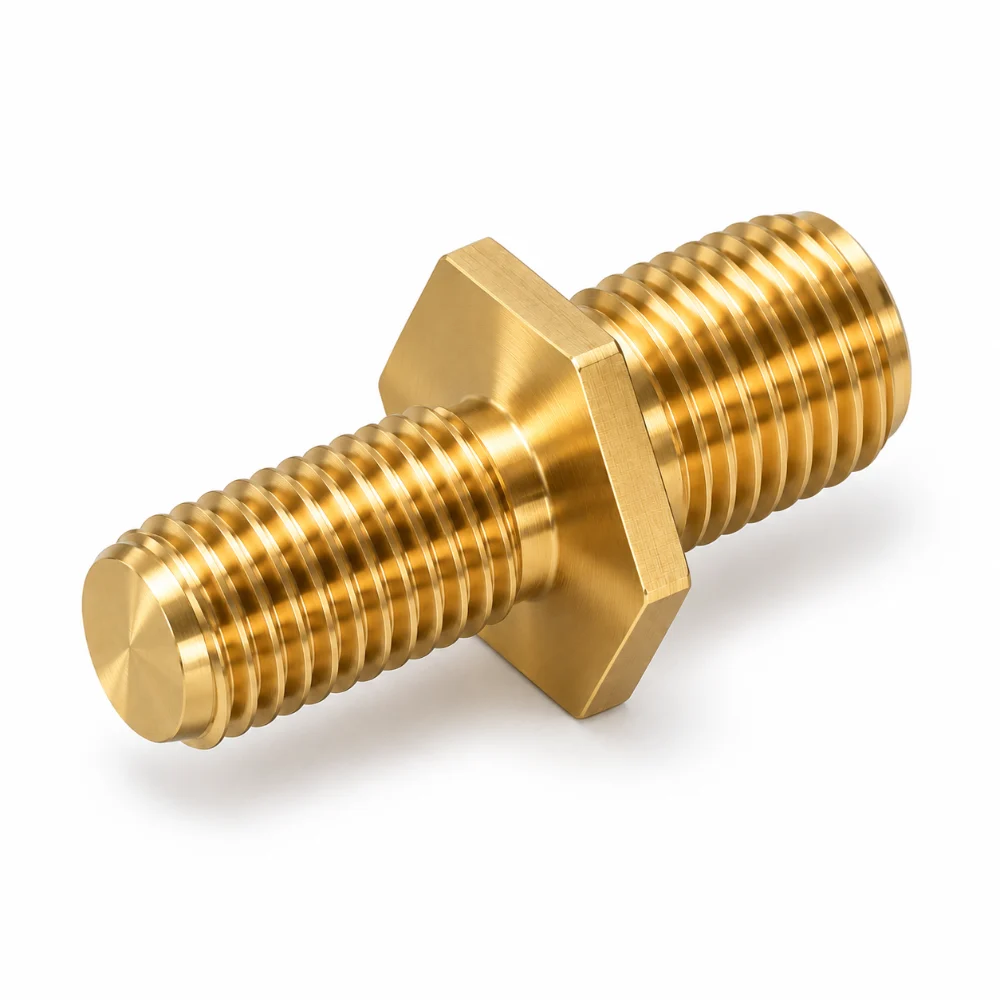
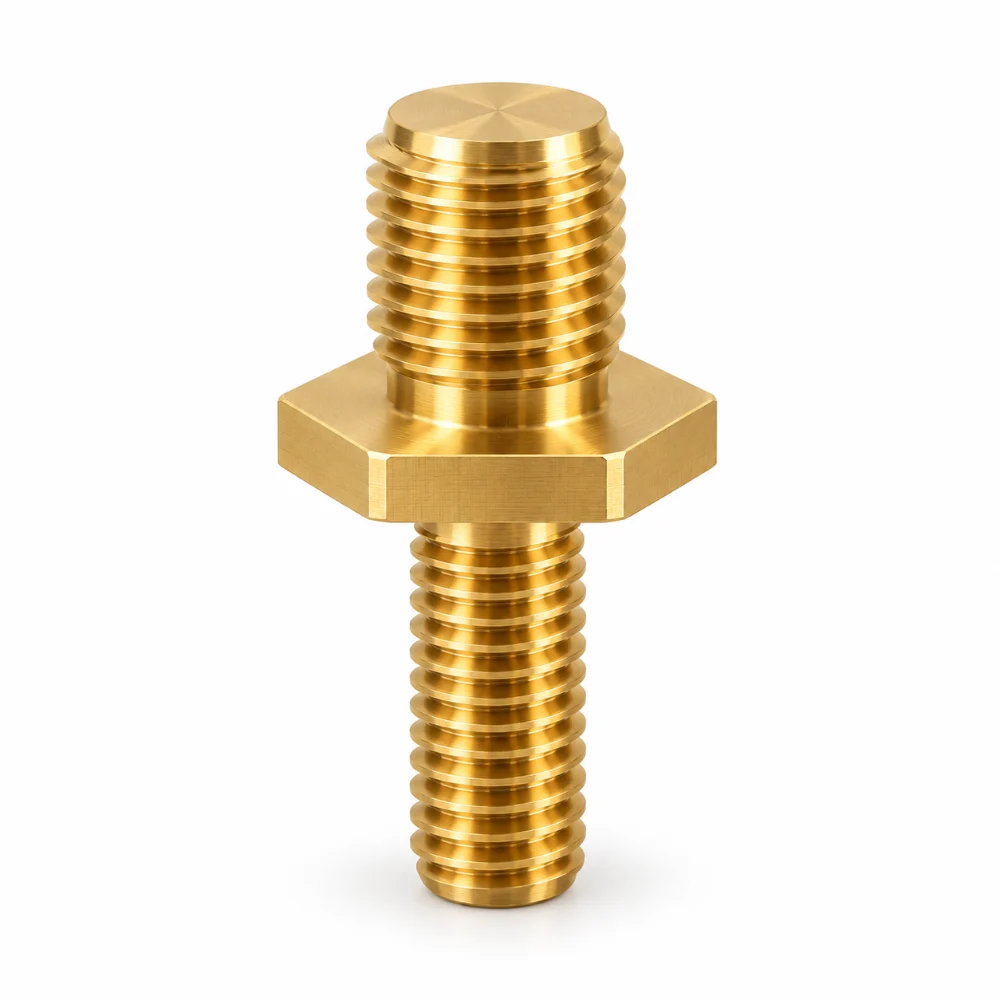
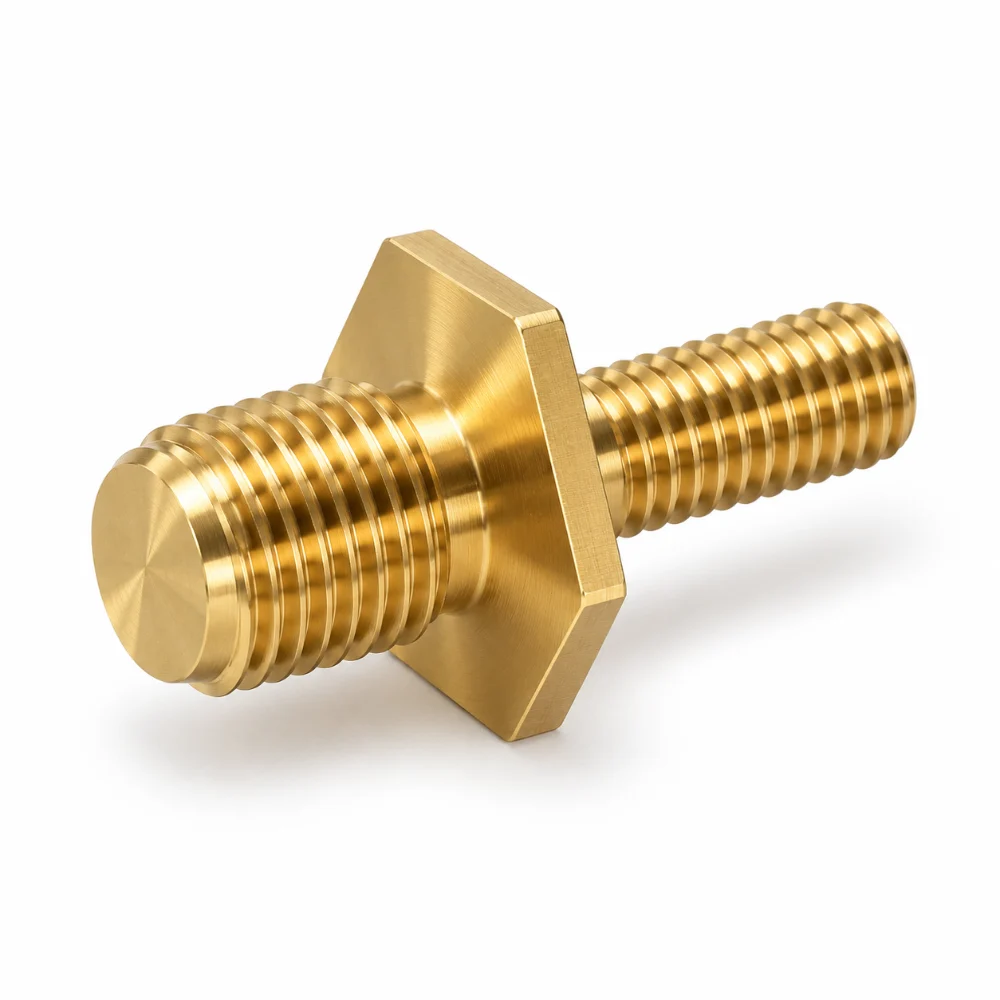


CNC Turned Brass Stud with Double-Ended Threads in C360 Brass
This is a precision component that is turned by CNC and is made from C360 brass. It is composed of two external threaded cylinders with different diameters separated by a polygonal centre plate that has been turned.
It has an interesting combination of rotation with a middle area that does not have a circular shape, which needs attention concerning thread geometry, shoulder transitions, and features in both sides needing to be aligned.
The customer that draws calls the part a “Top Plate”, and details it as C360 Brass and includes general dimensional and angular tolerances. This case serves as an example of manufacturing considerations to be made for custom manufactured brass threaded components that can serve as parts in mechanical assemblies.
-
Product Name: Custom CNC Turned Brass Stud
-
Material: C360 Brass
-
Manufacturing Process: Precision CNC Turning and Threading
-
Additional Process: Polygonal Profile Milling (As Required)
-
Main Features: Double-Ended External Threads, Stepped Diameters and Central Polygonal Plate
-
Dimensional Tolerances: Per Customer Engineering Drawing
-
Surface Appearance: Natural Machined Brass
-
Surface Treatment: Not Specified
-
Production Type: Custom Drawing-Based CNC Machining
 Get Free Quote


Precision CNC Turning of Double-Ended Brass Studs
The most distinctive characteristic of this component is the combination of two threaded sections and a central plate within a compact mechanical design.
Unlike a conventional threaded rod with a constant diameter, this part has different cylindrical sections on either side of the center plate.
These changes in geometry introduce additional considerations for machining sequence, tool access, and workholding.
External Thread Machining on Both Ends
Both projecting sections contain external threads, making thread geometry an important aspect of the design.
For components with different threaded diameters, each section may require a separate cutting setup or threading cycle.
Important manufacturing considerations include:
- Maintaining the required major and minor thread diameters
- Controlling thread pitch and profile
- Producing clean thread starts and ends
- Minimizing burr formation
- Preserving the relationship between both threaded sections
CNC single-point threading or other appropriate threading methods may be selected according to the approved specifications.
Karry Precision's CNC turning services support custom threaded parts, stepped shafts, and rotational components.
Machining the Central Polygonal Plate
The center section differs from the cylindrical threaded ends.
The photographs show a flat, multi-sided plate located between the two threaded projections.
This feature requires an additional geometric operation beyond conventional external cylindrical turning.
For similar components, milling with suitable indexing or integrated turning-milling equipment can produce the required polygonal outline.
The machining plan should preserve the plate's specified thickness, profile, and relationship to the stud's rotational axis.
Controlling Stepped Transitions
The part contains transitions between the cylindrical threaded sections and the central plate.
These regions require attention because tool access becomes more restricted near the plate surfaces.
Suitable machining methods should control shoulder geometry while avoiding unwanted undercuts or burrs.
Any chamfers, thread reliefs, or corner radii must follow the detailed engineering drawing rather than assumed standard dimensions.
Why C360 Brass for Precision Threaded Components?
The customer drawing specifies C360 brass, a copper-zinc alloy widely used for precision machining.
C360 is commonly known as free-machining brass because of its favorable cutting characteristics.
Its material properties offer several manufacturing advantages.
Excellent Machinability: C360 supports efficient turning, drilling, and threading operations with suitable tools and cutting parameters.
Good Surface Quality: Appropriate cutting conditions can produce smooth machined surfaces and clearly defined external features.
Suitable for Complex Turned Geometry: The alloy is frequently used for fittings, threaded connectors, fasteners, and other small machined components.
Natural Brass Appearance: The material provides a distinctive golden metallic finish without requiring an additional decorative coating.
The suitability of C360 for any specific application must be evaluated against the mechanical loads, operating environment, and applicable material requirements.
Technical Specifications
| Parameter | Specification |
|---|---|
| Product | CNC Turned Brass Stud |
| Customer Drawing Description | Top Plate |
| Material Grade | C360 Brass |
| Primary Machining Process | CNC Turning |
| Thread Machining | External Threading |
| Additional Machining | Polygonal Profile Milling (Suggested) |
| Main Structure | Double-Ended Threaded Body |
| Threaded Sections | Two Different External Diameters |
| Central Feature | Multi-Sided Plate |
| Dimensional Requirements | Customer Drawing |
| Angular Tolerances | General Drawing Requirements |
| Surface Appearance | Natural Machined Brass |
| Surface Treatment | Not Specified |
| Manufacturing Basis | Custom Engineering Drawing |
Thread sizes, pitch, overall length, and individual dimensional tolerances must be confirmed from the complete engineering drawing.
Manufacturing Sequence Considerations
The component combines cylindrical and polygonal geometry, so the machining sequence should consider both feature accessibility and workholding.
A suitable process plan for similar parts may include:
| Stage | Manufacturing Consideration |
|---|---|
| Material Preparation | Verify C360 brass stock |
| CNC Turning | Machine the main cylindrical profiles |
| Stepped Diameter Machining | Establish the two projecting sections |
| External Threading | Produce the required thread specifications |
| Polygonal Milling | Form the central multi-sided plate |
| Deburring | Remove sharp burrs around threads and plate edges |
| Dimensional Inspection | Verify critical geometry against the drawing |
The exact production sequence depends on the available machining equipment, selected stock form, part dimensions, and approved customer requirements.
Quality Control for Brass Threaded Parts
Dimensional verification is particularly important when a component contains multiple external threads and a non-circular locating or mounting feature.
The inspection plan should consider the following characteristics.
| Inspection Feature | Quality Control Focus |
|---|---|
| Upper Threaded Section | Thread diameter, pitch and profile |
| Lower Threaded Section | Thread diameter, pitch and profile |
| Central Plate | Thickness and polygonal geometry |
| Stepped Shoulders | Position and transition geometry |
| Overall Length | Compliance with drawing dimensions |
| Cylindrical Alignment | Relationship between threaded sections |
| Surface Condition | Burrs, tool marks and edge quality |
Suitable measuring equipment may include micrometers, thread gauges, optical measuring instruments, and other tools selected according to the specified tolerances.
Any required functional thread engagement should be checked using appropriate mating gauges or inspection methods.
Learn more about Karry Precision's tolerance and quality control capabilities.
Potential Applications of Custom Brass Studs
The drawing identifies this component as a Top Plate, but the complete assembly and final operating environment are not provided.
Depending on their design, similar custom brass threaded parts may be considered for:
- Mechanical fastening assemblies
- Custom equipment mounting connections
- Precision positioning components
- Specialized mechanical connectors
- Custom industrial hardware
The actual application must be confirmed before specifying load capacity, electrical function, or environmental performance.
Frequently Asked Questions
What is a CNC turned brass stud?
A CNC turned brass stud is a precision-machined cylindrical component made from brass. It may contain one or more threaded sections, stepped diameters, shoulders, or additional mounting features.
Why is C360 brass suitable for CNC turning?
C360 brass is a free-machining alloy with good cutting characteristics. It is commonly used for small precision parts, threaded connectors, fittings, and custom mechanical components.
Can CNC turning produce threads on both ends of a stud?
Yes. CNC turning can produce external threads on both ends of a component. Different thread diameters or pitches can be machined according to the engineering drawing.
How is the polygonal center plate manufactured?
A multi-sided center section can be produced using suitable milling or turning-milling operations. The method depends on the part geometry and equipment configuration.
What tolerances are required for custom brass studs?
Tolerance requirements depend on the component design. Individual thread dimensions, lengths, plate geometry, and positional requirements should follow the approved engineering drawing.
Can Karry Precision manufacture custom brass threaded parts?
Karry Precision offers CNC machining services for custom brass components, including threaded studs, connectors, shafts, and other precision parts. Customers can submit 2D drawings or 3D CAD files for manufacturing review and quotation.