
 Contact Us
 Home / /


CNC Machined Electrical Terminal with Silver-Plated C954 Aluminum Bronze
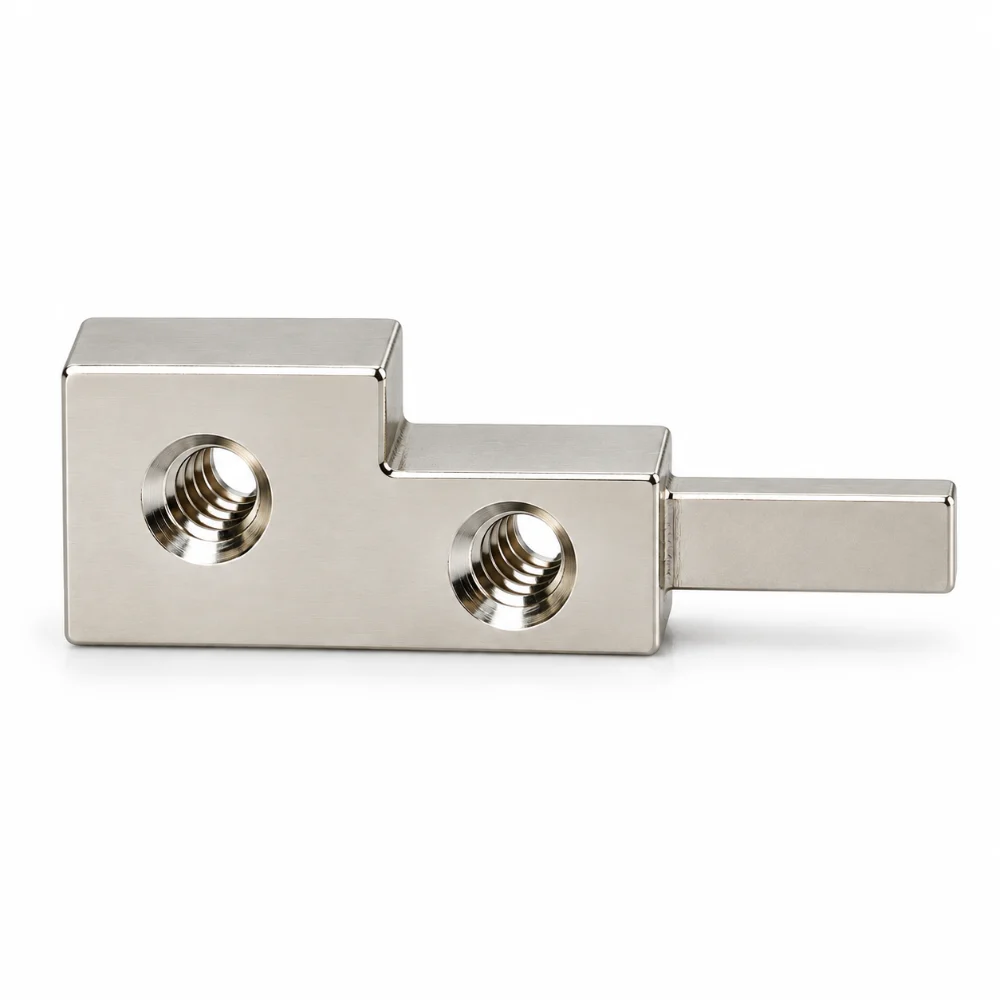
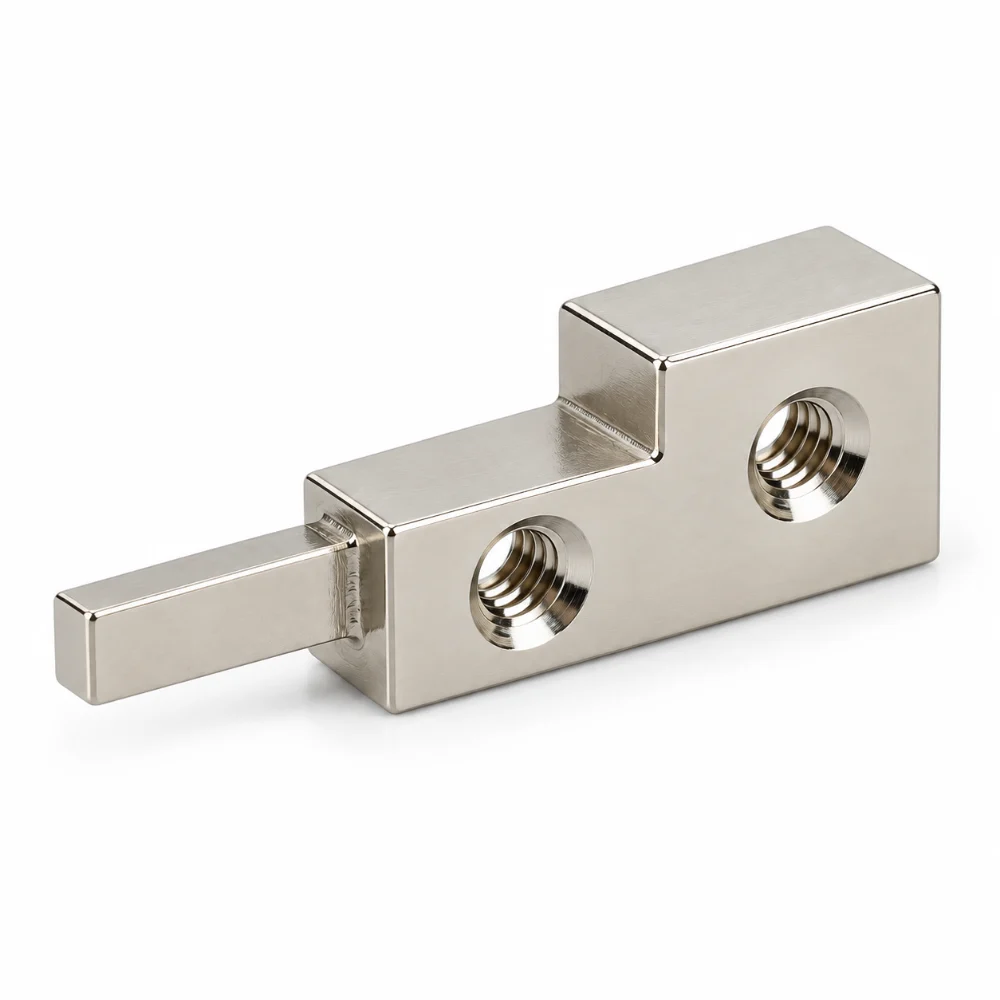
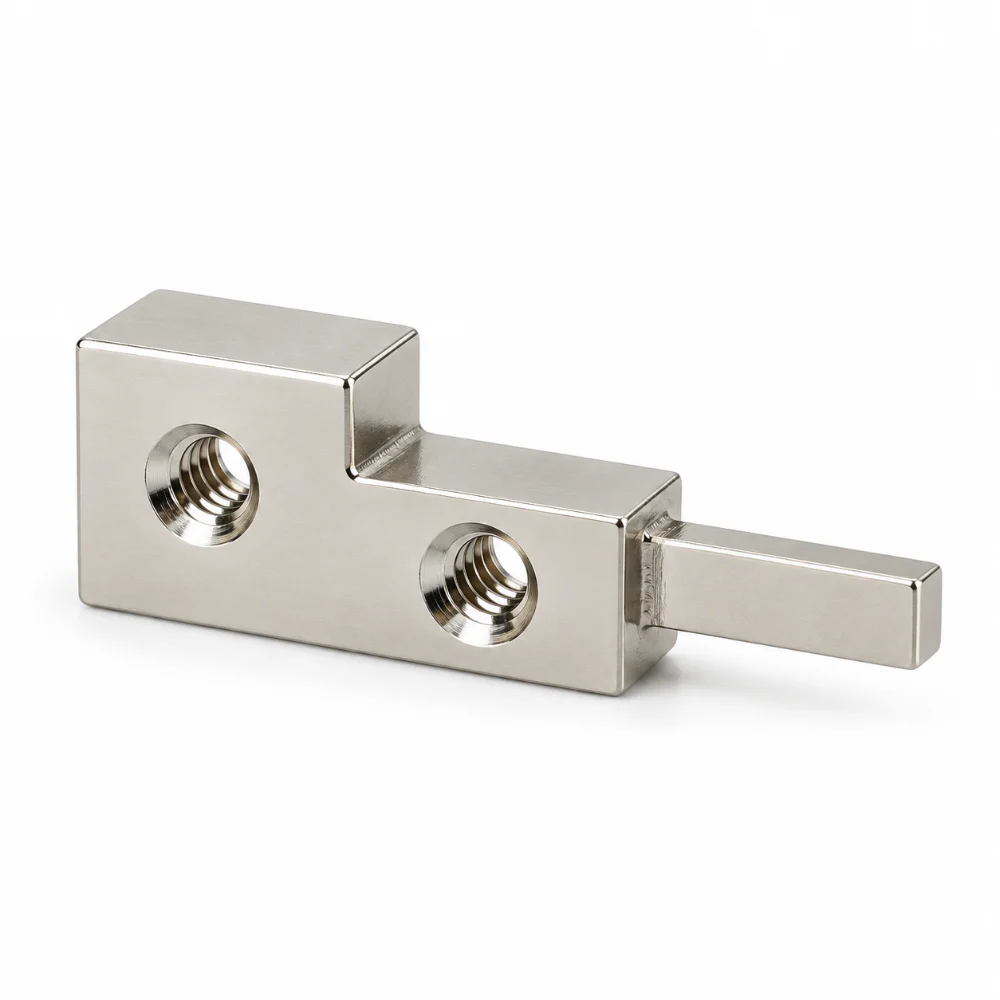
This CNC Machined Electrical Terminal is a custom metal component manufactured for a Briggs Tester assembly. Made from C954 aluminum bronze, the part features a stepped rectangular body, two connection holes, and a narrow projecting terminal section.
The customer documentation specifies overall dimensions of 39.37 × 11.81 × 6.35 mm, a general tolerance requirement of ±0.005″ (±0.13 mm), and a silver-plated surface with a specified coating thickness of approximately 20–30 μm.
-
Product Name: Custom CNC Machined Electrical Terminal
-
Drawing Description: Terminal Set 1 – Briggs Tester
-
Material: C954 Aluminum Bronze
-
Suggested Manufacturing Process: Precision CNC Milling, Drilling and Tapping
-
Overall Dimensions: 39.37 × 11.81 × 6.35 mm
-
General Precision Requirement: ±0.005″ (±0.13 mm)
-
Surface Roughness: Ra 3.2 μm (Production Requirement)
-
Surface Treatment: Silver Plating
-
Plating Thickness: Approximately 20–30 μm (Drawing Requirement)
-
Main Features: Stepped Body, Two Connection Holes and Projecting Terminal Section
-
Quality Documentation: Standard Inspection Report and Material Traceability Certificate
-
Production Type: Custom Drawing-Based CNC Machining
 Get Free Quote


CNC Milling of a Stepped Electrical Terminal
The component has a compact, stepped profile with several different thickness and height transitions.
These features distinguish it from a conventional flat contact plate.
The body contains two connection holes, while a narrower section extends beyond the main mounting region.
Producing the required geometry involves controlling the relationship between the external profile, stepped surfaces, and hole positions.
Machining the Stepped Body
For similar parts, CNC milling is a suitable method for producing rectangular profiles, shoulders, and narrow extensions.
The machining process should consider:
- Maintaining the specified overall dimensions
- Controlling the height of stepped features
- Producing consistent flat mounting surfaces
- Preventing burrs around transitions
- Maintaining suitable edge conditions before plating
The relatively compact geometry also requires suitable workholding to prevent unwanted movement during machining.
Karry Precision provides precision CNC milling services for custom copper-alloy components, mounting parts, and precision machined connectors.
Drilling and Tapping the Connection Holes
The terminal contains two connection holes positioned along the main body.
The original photographs show machined internal features within these openings, while the production notes identify two threaded-hole features.
For comparable electrical terminals, drilling and tapping operations must account for the required hole location, thread geometry, and subsequent plating.
Important manufacturing considerations include:
- Hole diameter and positional accuracy
- Proper thread formation
- Removal of machining burrs
- Surface condition inside the holes
- Compatibility with mating fasteners
The specific thread size and tolerance should follow the final approved engineering drawing.
Why C954 Aluminum Bronze for Electrical Terminal Components?
C954 aluminum bronze is a copper-based alloy containing aluminum as a principal alloying element.
It is commonly selected for industrial components requiring useful mechanical strength, wear resistance, and corrosion resistance.
For this project, C954 provides a metallic base material that can be precision-machined and subsequently plated.
The use of C954 also introduces an important distinction from conventional high-conductivity copper terminals.
Although aluminum bronze conducts electricity, its electrical conductivity is generally lower than that of high-purity copper.
Therefore, material selection must consider the required mechanical properties, electrical performance, and contact design rather than assuming that all copper alloys behave identically.
Silver Plating for the Electrical Terminal
One of the most important requirements in this project is the specified silver-plated finish.
Silver is widely used on electrical contact surfaces because of its high electrical conductivity.
When properly applied, silver plating can provide a conductive surface for appropriate electrical connections.
Controlling Silver Plating Thickness
The customer drawing specifies a silver coating thickness in the approximate range of 20–30 μm.
This requirement should be considered during both machining and surface treatment.
The coating can affect the finished dimensions of holes, threaded features, and other mating surfaces.
A suitable manufacturing plan should therefore evaluate:
- Surface preparation before plating
- Coating thickness and distribution
- Coverage of accessible contact areas
- Changes in finished dimensions
- Condition of holes and edges after plating
The required coating thickness must be verified using an appropriate inspection method.
Surface Preparation Before Plating
Surface preparation is important when applying a metallic coating to precision-machined components.
Machining oils, residues, burrs, and surface contamination should be removed using a suitable process.
For aluminum bronze, plating procedures must also account for the characteristics of the base alloy.
The exact cleaning, activation, underplating, and silver deposition sequence should be established through the approved finishing specification.
See Karry Precision's surface finishing capabilities for more information.
Detailed Technical Specifications
| Parameter | Specification |
|---|---|
| Product Name | CNC Machined Electrical Terminal |
| Drawing Description | Terminal Set 1 – Briggs Tester |
| Base Material | C954 Aluminum Bronze |
| Material Family | Copper Alloy |
| Main Manufacturing Method | CNC Milling (Suggested) |
| Additional Operations | Drilling and Tapping |
| Overall Dimensions | 39.37 × 11.81 × 6.35 mm |
| General Precision Requirement | ±0.005″ (±0.13 mm) |
| Surface Roughness | Ra 3.2 μm |
| Connection Features | Two Threaded-Hole Features |
| External Geometry | Stepped Body with Narrow Extension |
| Surface Finish | Silver Plating |
| Plating Thickness | Approximately 20–30 μm |
| Edge Preparation | Per Engineering Drawing |
| Inspection Documentation | Standard Inspection Report |
| Material Documentation | Material Traceability Certificate |
The information above represents the supplied drawing and production requirements. Actual machining operations, coating measurements, and electrical performance results require separate confirmation.
Quality Control for Silver-Plated Electrical Terminals
Dimensional inspection alone is not sufficient when a machined component also requires a functional metallic coating.
For this type of terminal, the inspection plan should consider both the base component and the finished plated surfaces.
| Inspection Feature | Quality Control Focus |
|---|---|
| Overall Dimensions | Length, width and thickness |
| Stepped Profile | Feature geometry and relative positions |
| Connection Holes | Diameter, position and thread condition |
| Projecting Terminal Section | Dimensions and edge quality |
| Machined Surfaces | Applicable Ra 3.2 μm requirement |
| Silver Plating | Thickness, coverage and visible condition |
| Material Verification | C954 alloy traceability |
| Final Component | Drawing compliance after finishing |
Suitable inspection methods may include calipers, micrometers, optical measurement equipment, thread gauges, and coating thickness testing.
Where electrical performance is critical, contact resistance and other functional tests should be specified separately by the customer.
The supplied documentation requests standard inspection and material traceability, but it does not include actual measured electrical resistance or plating test results.
Learn more about Karry Precision's tolerance and quality control capabilities.
Application in Industrial Testing Equipment
The engineering drawing identifies the component as part of a Briggs Tester assembly.
Its shape and connection features are consistent with a custom terminal intended to interface with other parts of a testing system.
The silver-plated finish is relevant to electrical contact applications, while the stepped geometry provides distinct mechanical interfaces.
Depending on the complete assembly design, similar components may be used in test fixtures, electrical connection assemblies, and specialized industrial equipment.
However, the available documentation does not establish a specific current rating, voltage rating, contact resistance, or duty cycle.
These values must be determined from the complete electrical and mechanical design.
Frequently Asked Questions
What is a CNC machined electrical terminal?
A CNC machined electrical terminal is a custom metal component produced using precision machining processes. It may include connection holes, threaded features, and specialized contact surfaces for electrical equipment.
Why is C954 aluminum bronze used for custom terminals?
C954 aluminum bronze provides useful mechanical strength, wear resistance, and corrosion resistance. Its use in an electrical terminal should be evaluated alongside the required conductivity and contact conditions.
What are the benefits of silver plating on electrical terminals?
Silver plating provides a highly conductive surface and is commonly used for suitable electrical contact applications. Coating performance depends on thickness, adhesion, environmental conditions, and the mating contact design.
Does silver plating affect CNC machined dimensions?
Yes. Silver plating adds material to the component surface and can affect finished dimensions, including holes and threaded areas. Machining allowances and finished-part inspection should account for the specified coating.
Can CNC milling produce small electrical terminal components?
Yes. CNC milling can manufacture stepped profiles, mounting features, and compact connector bodies. Drilling and tapping operations can be used where required by the component design.
Can Karry Precision manufacture custom silver-plated electrical terminals?
Karry Precision provides custom CNC machining services for copper alloys and other engineering metals. Customers can submit drawings for review of material requirements, connection geometry, machining tolerances, surface finishing, and inspection documentation.