
 Contact Us
 Home / /
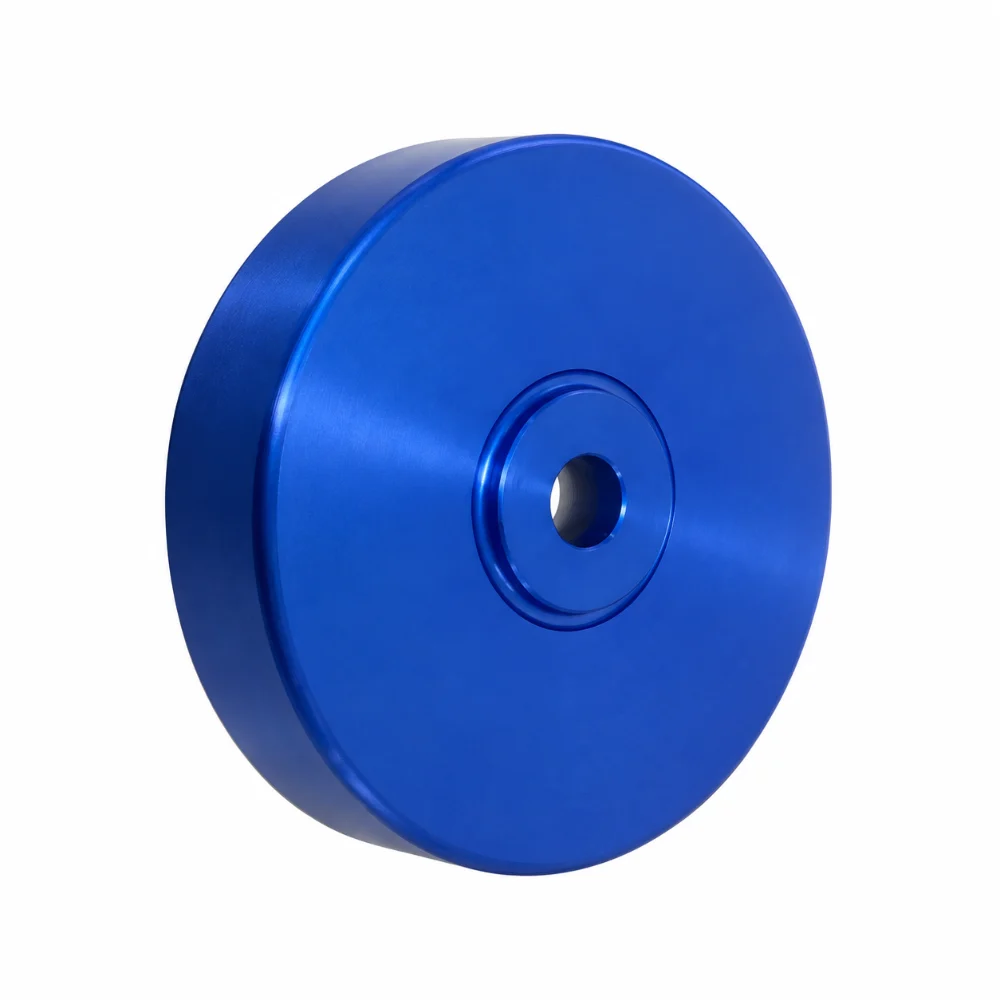
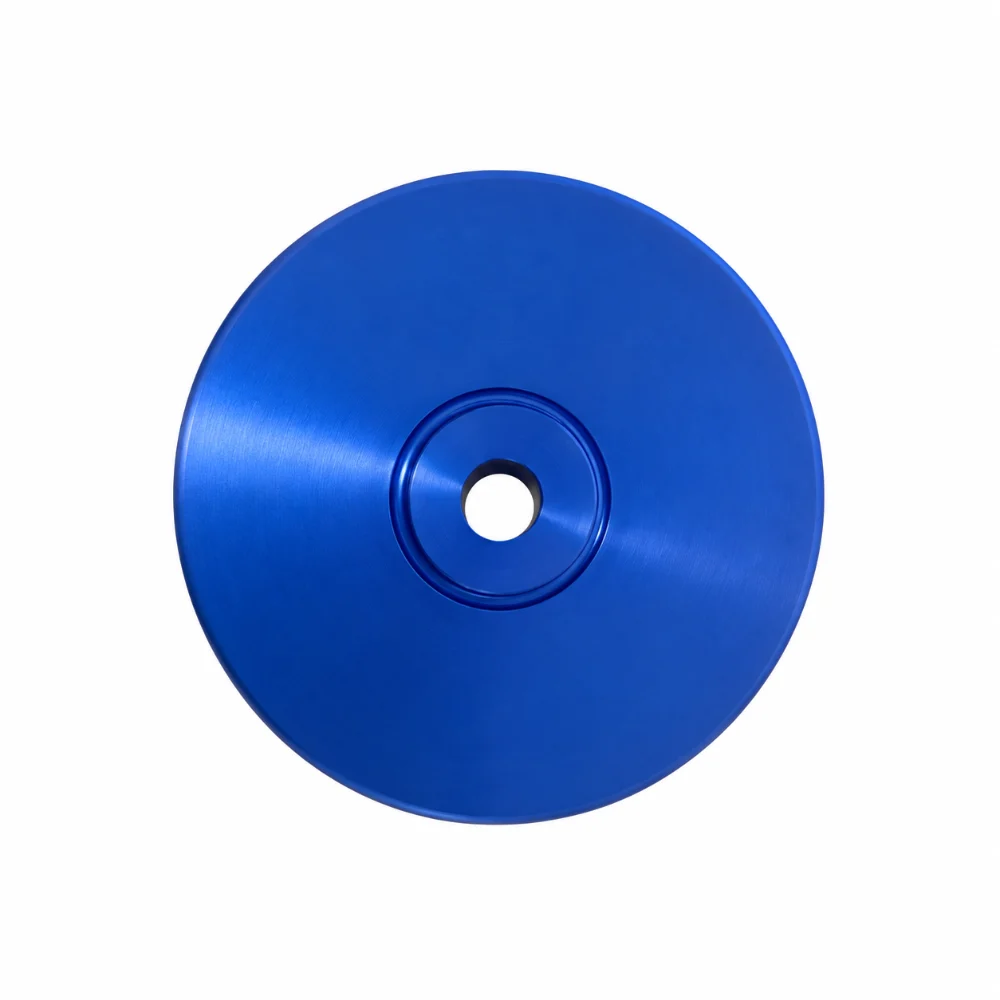


CNC Machined Aluminum Piston with Blue Anodized Finish
This CNC Machined Aluminum Piston is a custom precision component manufactured from Aluminum 2014A-T6 according to a customer-supplied engineering drawing.
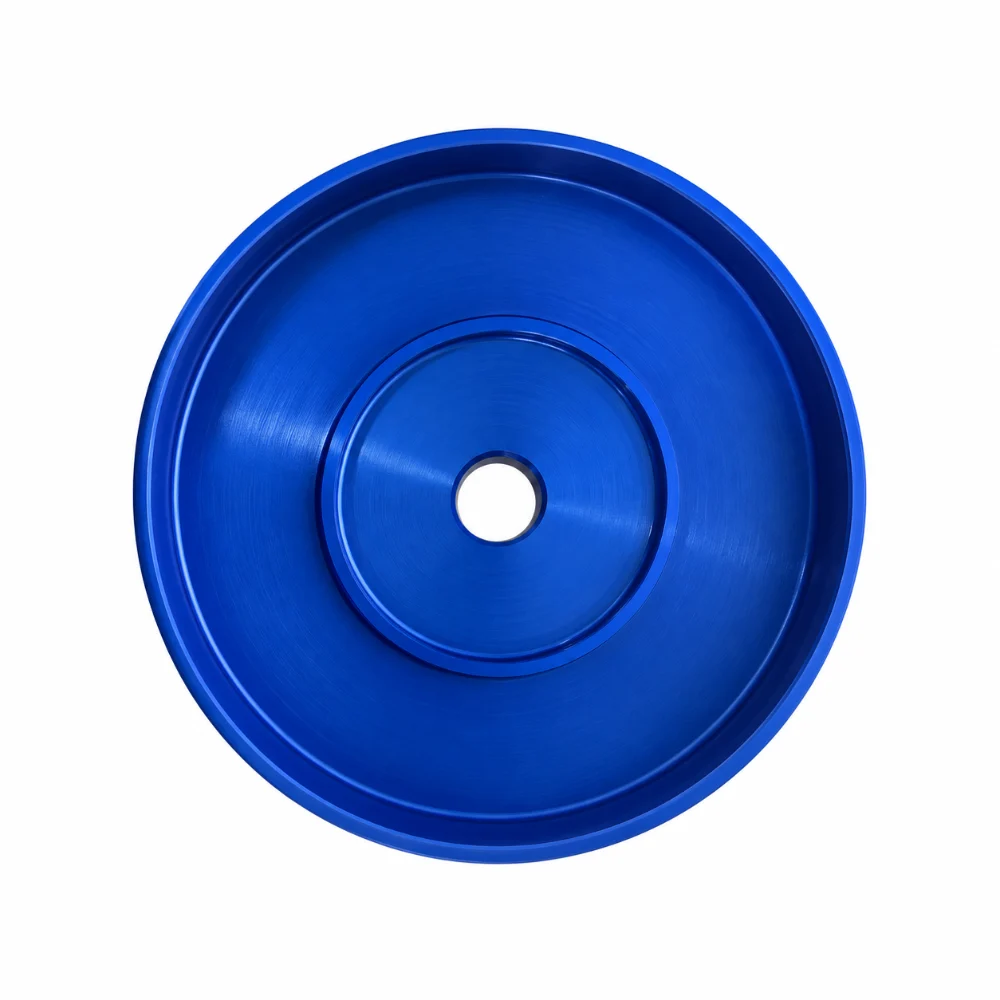
The component features a circular body, central through-hole, concentric stepped profiles, and a recessed internal section. Its blue anodized finish provides a distinctive appearance and a protective surface layer.
The drawing specifies ISO 2768-fH general tolerances and a surface texture requirement of Ra 0.8 μm unless otherwise stated. This project demonstrates the machining and finishing considerations involved in producing custom aluminum components with rotational geometry.
-
Product Name: Custom CNC Machined Aluminum Piston
-
Material: Aluminum 2014A-T6
-
Manufacturing Process: Precision CNC Turning, Drilling and Boring
-
General Tolerances: ISO 2768-fH
-
Surface Roughness: Ra 0.8 μm (drawing requirement)
-
Surface Treatment: Blue Anodizing
-
Main Features: Circular Body, Central Bore, Stepped Profiles and Recessed Cavity
-
Production Type: Custom Drawing-Based CNC Machining
 Get Free Quote


Precision CNC Turning for Aluminum Piston Components
The piston has a rotationally symmetrical design, making CNC turning a suitable primary manufacturing method.
Unlike a simple solid aluminum disc, this component includes multiple concentric surfaces, a raised central section, and an internal recessed profile.
These features require careful machining to maintain the relationship between the outer diameter, central bore, and stepped surfaces.
For similar components, precision CNC turning enables controlled machining of external profiles, internal recesses, and axial holes.
Key Manufacturing Challenges
1. Maintaining Concentric Geometry
The piston contains several circular features arranged around a common centerline. Controlling concentricity during machining is important for maintaining the intended geometry and supporting assembly alignment.
2. Machining the Recessed Internal Profile
The cup-shaped internal section requires careful tool selection and machining access. Appropriate turning and boring operations help produce consistent recessed surfaces and stepped transitions.
3. Controlling the Central Bore
The center hole is a prominent feature of the component. Its diameter, position, and edge condition should be verified against the customer drawing to ensure compatibility with the mating assembly.
4. Achieving the Required Surface Texture
The engineering drawing specifies Ra 0.8 μm unless otherwise stated. Suitable finishing passes and cutting conditions are important for achieving the specified machined surface texture before anodizing.
5. Blue Anodizing of 2014A-T6 Aluminum
After machining, the component receives a blue anodized finish. Because 2014A is a copper-containing aluminum alloy, anodizing parameters and color consistency require attention.
Coating thickness, appearance, and the fit of critical features should be reviewed according to the finishing specification.
Detailed Technical Specifications
| Parameter | Specification |
|---|---|
| Component Name | Precision Machined Aluminum Piston |
| Material Grade | Aluminum 2014A |
| Material Temper | T6 |
| Main Machining Method | CNC Turning |
| Additional Operations | Drilling / Internal Boring |
| Surface Treatment | Blue Anodizing |
| Specified Surface Texture | Ra 0.8 μm unless otherwise stated |
| General Tolerance Standard | ISO 2768-fH |
| Drawing Standard | BS 8888 |
| Unspecified Edge Standard | ISO 13715 |
| Additional Heat Treatment | None specified |
| Dimensional Units | Millimeters |
| Manufacturing Basis | Customer Engineering Drawing |
Note: The displayed drawing excerpt contains the general specifications but not the complete dimensional views. Individual feature dimensions and any specific tolerance callouts must follow the approved drawing.
Quality Control for CNC Machined Aluminum Parts
Consistent dimensional control is important when manufacturing aluminum components with multiple concentric features.
For this type of piston, a suitable inspection plan focuses on the following areas:
| Inspection Item | Quality Control Focus |
|---|---|
| External Profile | Outer diameter, roundness and dimensional consistency |
| Central Bore | Hole diameter, alignment and edge condition |
| Internal Recess | Profile geometry, depth and concentric features |
| Surface Texture | Verification against the specified Ra requirement |
| Anodized Finish | Coating appearance, coverage and applicable dimensional requirements |
| General Dimensions | Compliance with drawing tolerances |
Particular attention should be given to dimensions that influence assembly fit. Appropriate measuring tools and surface inspection methods can be selected according to each feature's tolerance requirements.
Karry Precision's CNC machining capabilities support custom components produced from customer drawings and CAD models.
Potential Applications
The engineering drawing identifies this component as a piston, but does not specify its final equipment or operating environment.
Depending on the complete assembly design, similarly shaped precision aluminum components may be suitable for:
- Custom mechanical assemblies requiring circular locating and mounting features.
- Industrial equipment incorporating specialized piston or disc-shaped components.
- Precision motion and positioning mechanisms.
- Prototype mechanical systems and custom engineering equipment.
The actual application, operating loads, and mating components must be confirmed before determining functional suitability.
Benefits of 2014A-T6 Aluminum CNC Machining
High Strength-to-Weight Ratio: Aluminum 2014A-T6 provides useful mechanical strength while keeping component weight relatively low.
Precision Circular Features: CNC turning is suitable for machining concentric diameters, stepped surfaces, and central bores.
Custom Surface Finishing: Blue anodizing creates a protective oxide layer and provides a consistent design appearance when the process is properly controlled.
Drawing-Based Manufacturing: Material requirements, dimensions, tolerances, and surface treatments can be reviewed and manufactured according to customer specifications.
For additional options, explore our surface finishing services.