
 Contact Us
 Home / /


CNC Machined Aluminum Heat Sink with Black Anodized Electronics Baseplate
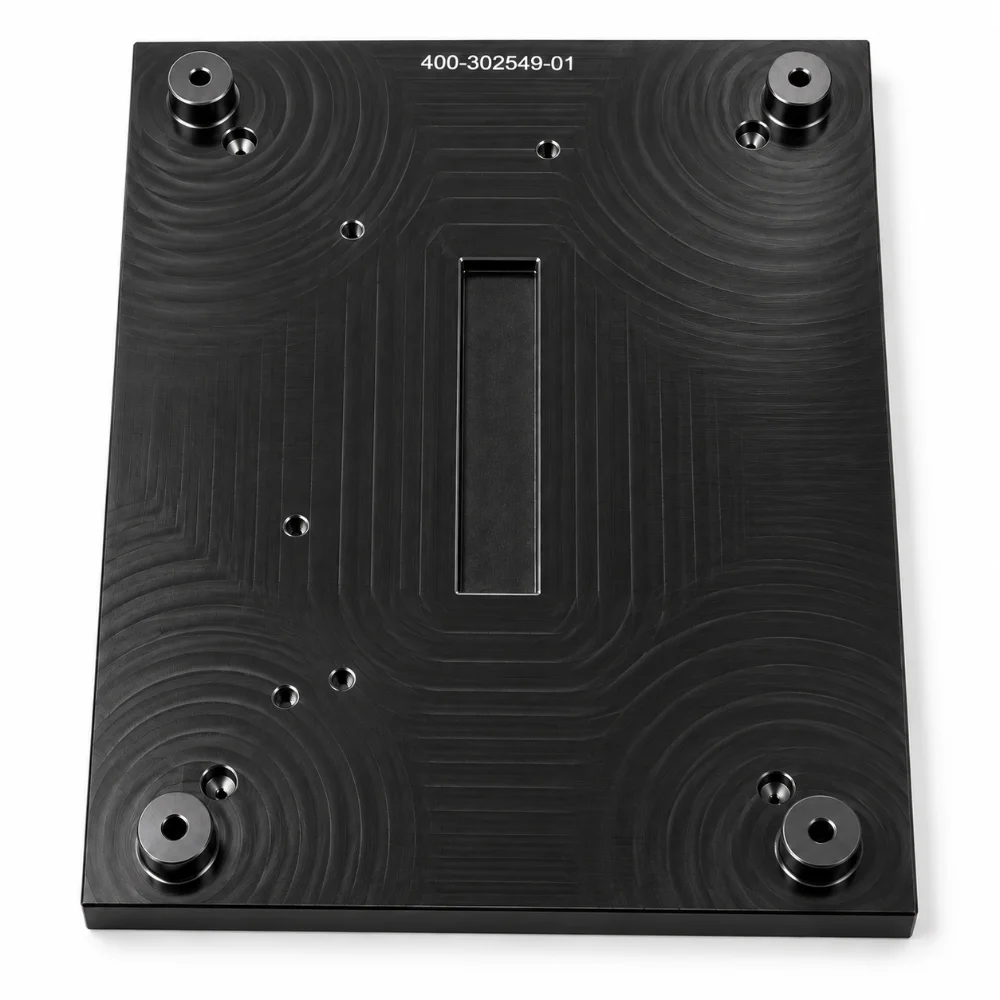
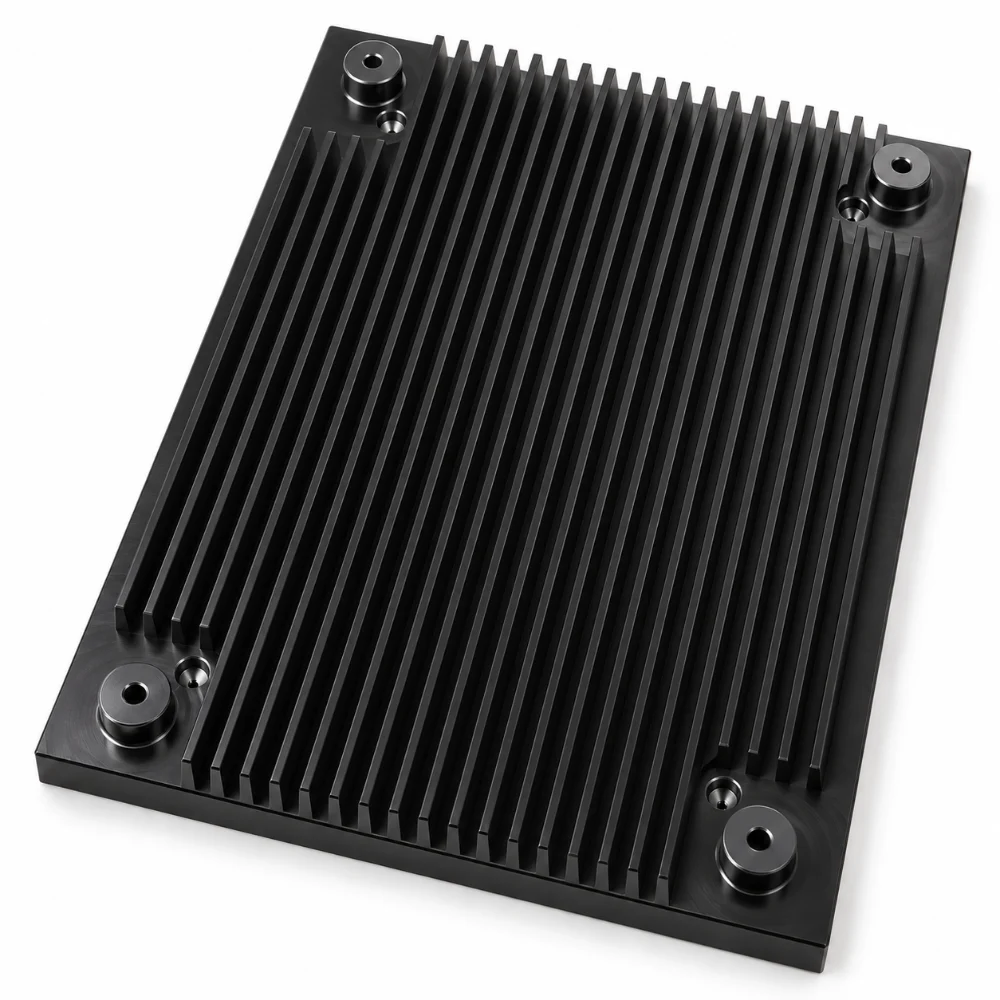
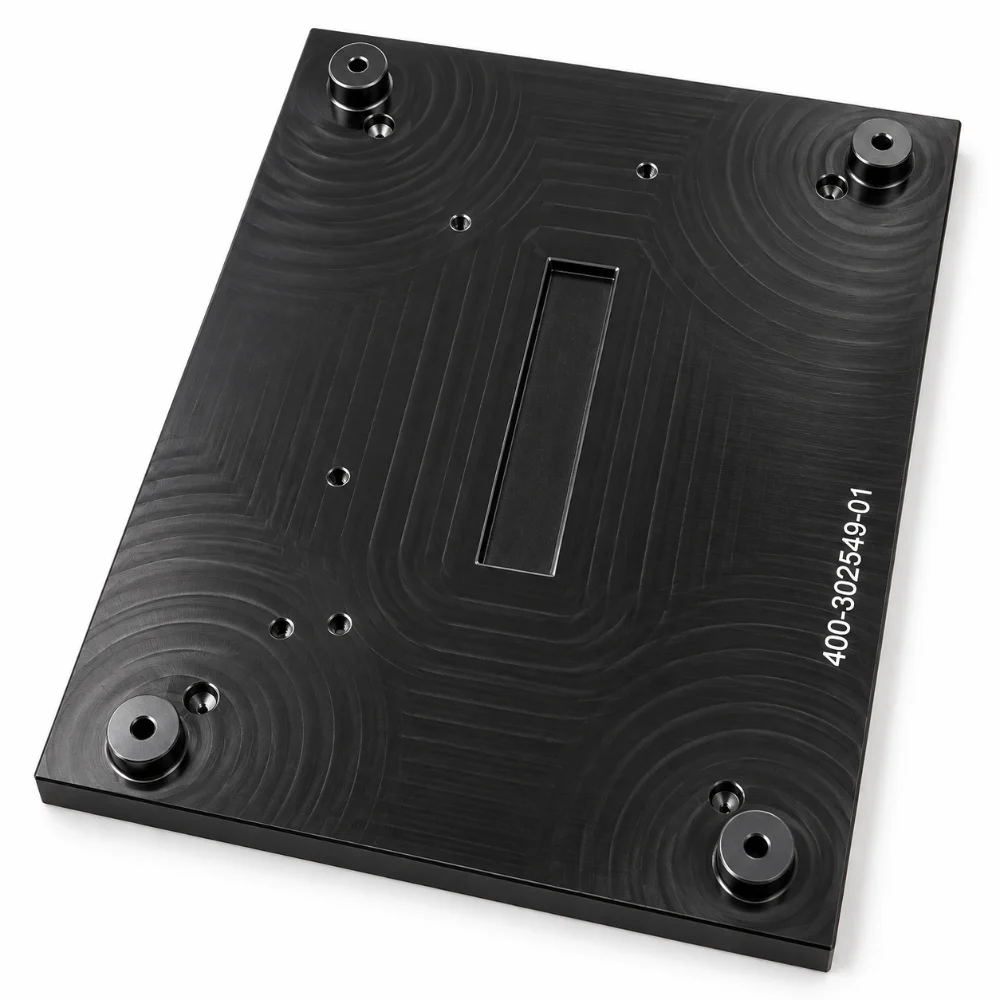
This CNC Machined Aluminum Heat Sink is a custom designed CNC 6061-T6 Aluminum Electronics Baseplate. This component includes a precision machined mounting surface along with four raised cylindrical bosses, several mounting holes and a series of closely spaced cooling fins on the other side.
This is not a regular flat mounting plate, because it has mechanical positioning facilities combined with finned heat dissipating design.
Black anodizing is described by the customer drawing to MIL-A-8625F Type II, Class 2. The goal of this project is to show the machining aspects for the production of aluminium cooling components which have very complex surface features and controlled assembly surfaces.
-
Product Name: Custom CNC Machined Aluminum Heat Sink
-
Material: 6061-T6 Aluminum Alloy
-
Manufacturing Process: Precision CNC Milling and Drilling
-
Surface Treatment: Black Anodizing
-
Anodizing Standard: MIL-A-8625F Type II, Class 2
-
Main Features: Cooling Fins, Mounting Bosses, Precision Holes and Rectangular Pocket
-
Component Type: Electronics Baseplate
-
Manufacturing Type: Custom Drawing-Based CNC Machining
 Get Free Quote


CNC Milling for an Integrated Aluminum Heat Sink
The component features two visually distinct sides that perform different design functions.
One side contains a rectangular recessed pocket, four raised cylindrical bosses near the corners, and several smaller machined holes.
The opposite side features a dense array of parallel cooling fins.
This combination introduces manufacturing challenges beyond those of a conventional flat aluminum plate.
The machining strategy must consider the geometry of the fins while preserving the mounting features required for the electronic assembly.
Precision Milling of Cooling Fins
The closely spaced fins are a key feature of this aluminum heat sink.
Increasing the surface area available for heat exchange is a common objective of finned heat sink designs. However, thermal performance depends on the complete geometry, airflow conditions, and operating environment.
From a manufacturing perspective, closely spaced aluminum fins require attention to cutting-tool geometry, machining depth, and chip removal.
Potential challenges include:
- Maintaining consistent fin spacing
- Controlling fin thickness and height
- Reducing vibration during machining
- Preventing damage to narrow fin edges
- Removing machining debris between adjacent fins
Suitable CNC milling strategies help produce the required fin geometry while maintaining the component's overall shape.
For related manufacturing capabilities, explore Karry Precision's CNC milling services.
Machining Integrated Mounting Bosses
The opposite face contains four raised cylindrical mounting bosses positioned near the corners.
Each boss includes a central hole that may serve a fastening or locating function, depending on the assembly design.
The position and height of these features should be controlled relative to the reference surfaces specified in the engineering drawing.
Additional drilled holes and the central rectangular recess introduce further machining and inspection requirements.
For similar components, accurate positioning of the mounting features helps reduce assembly interference and supports consistent mechanical alignment.
Managing Baseplate Geometry
A heat sink baseplate must satisfy both thermal interface requirements and mechanical assembly constraints.
When a large aluminum plate undergoes material removal on different faces, machining stresses and workholding conditions can affect the finished geometry.
Suitable machining sequences and stable fixturing are important for controlling unwanted distortion.
Where the baseplate contacts another component, flatness and surface condition should follow the approved drawing and thermal interface requirements.
Why 6061-T6 Aluminum for CNC Machined Heat Sinks?
6061-T6 aluminum is commonly selected for machined electronic components because it offers a useful balance of machinability, mechanical strength, relatively low weight, and thermal conductivity.
For custom heat sink manufacturing, this material provides several practical advantages.
Good Machinability: Suitable for producing mounting bosses, recessed pockets, drilled holes, and fin features using CNC processes.
Thermal Conductivity: Aluminum conducts heat and can transfer thermal energy from a mounted component toward the finned structure.
Low Weight: Aluminum is relatively lightweight compared with many steel alloys, making it useful for electronic equipment where mass is a design consideration.
Anodizing Compatibility: 6061-T6 aluminum is compatible with conventional anodizing processes, including black Type II finishes.
Material suitability and heat sink performance must be evaluated against the actual thermal load and operating environment.
Detailed Technical Specifications
| Parameter | Specification |
|---|---|
| Product | CNC Machined Aluminum Heat Sink |
| Drawing Description | Electronics Baseplate |
| Material Grade | Aluminum 6061-T6 |
| Main Manufacturing Process | CNC Milling |
| Additional Machining | Drilling and Pocket Milling |
| Cooling Structure | Parallel Machined Fins |
| Mounting Features | Four Raised Cylindrical Bosses |
| Additional Features | Small Holes and Rectangular Pocket |
| Surface Finish | Black Anodizing |
| Finish Standard | MIL-A-8625F Type II, Class 2 |
| Dimensional Requirements | According to Customer Drawing |
| Project Type | Custom Precision Machined Component |
Individual dimensions, fin spacing, hole tolerances, and thermal performance values are not available in the supplied drawing excerpt.
Black Anodizing for Aluminum Electronics Components
The drawing specifies a black anodized finish according to MIL-A-8625F Type II, Class 2.
Type II anodizing forms an oxide layer on aluminum, providing corrosion protection and a surface suitable for coloring.
For this component, the black finish creates a consistent appearance across the baseplate and finned surfaces.
However, anodizing introduces important manufacturing considerations.
The coating affects surface dimensions and is generally electrically insulating. If the application requires electrical grounding or direct metal contact, any necessary masking or contact-area treatment should follow the customer drawing.
Coating thickness, finish appearance, and acceptance requirements should be established before production.
Karry Precision provides additional surface finishing options for custom aluminum components.
Quality Control for Precision Aluminum Heat Sinks
Quality inspection for a machined heat sink should focus on both its mechanical mounting features and the geometry of the cooling structure.
| Inspection Feature | Quality Control Focus |
|---|---|
| Cooling Fins | Fin thickness, spacing, height and edge condition |
| Mounting Bosses | Diameter, height and positional accuracy |
| Mounting Holes | Hole size, location and applicable thread requirements |
| Central Pocket | Recess dimensions and profile |
| Baseplate | Overall dimensions and specified flatness |
| Anodized Surface | Coating appearance, coverage and specified acceptance criteria |
Suitable inspection methods may include calipers, micrometers, height gauges, and coordinate measuring equipment, depending on the required dimensions.
Thermal testing is a separate activity from dimensional inspection. The available project documentation does not provide verified thermal resistance, operating temperature, or heat dissipation test results.
Learn more about Karry Precision's tolerance and quality control capabilities.
Applications of Custom CNC Machined Heat Sinks
The customer drawing identifies this component as an electronics baseplate, but it does not specify the final electronic device.
Similar custom aluminum heat sinks may be used in:
- Electronic equipment cooling assemblies
- Industrial control electronics
- Power electronic modules
- Communication equipment
- Custom electronic enclosures and mounting systems
Each application requires an appropriate review of thermal loads, airflow, mounting interfaces, and environmental conditions.
Frequently Asked Questions
What is a CNC machined aluminum heat sink?
A CNC machined aluminum heat sink is a custom cooling component manufactured using computer-controlled machining processes. It may combine fins, mounting holes, bosses, and other mechanical features designed for a specific electronic assembly.
Why is 6061-T6 aluminum used for this heat sink?
6061-T6 provides good machinability, useful strength, low weight, and thermal conductivity. It is suitable for custom machined designs that require integrated mounting features and cooling structures.
Can CNC milling produce thin heat sink fins?
Yes. CNC milling can manufacture closely spaced fin structures when the geometry is accessible and suitable tooling and machining parameters are selected. Minimum practical fin thickness depends on the material, fin height, spacing, and manufacturing conditions.
Does black anodizing improve heat sink performance?
Black anodizing changes the surface properties and can support radiative heat transfer under certain conditions. However, overall cooling performance also depends on conduction, convection, airflow, and installation conditions. Thermal improvement should not be assumed without application-specific evaluation.
What is MIL-A-8625F Type II Class 2 anodizing?
It is a specification for anodic coatings on aluminum. Type II covers conventional sulfuric acid anodizing, while Class 2 designates a dyed finish. The project drawing specifies black as the required color.
Can Karry Precision manufacture custom aluminum heat sinks from drawings?
Karry Precision provides custom CNC machining services for aluminum components. Customers can submit 2D engineering drawings or 3D CAD files to review fin geometry, mounting features, material requirements, anodizing, and inspection needs.