
 Contact Us
 Home / /
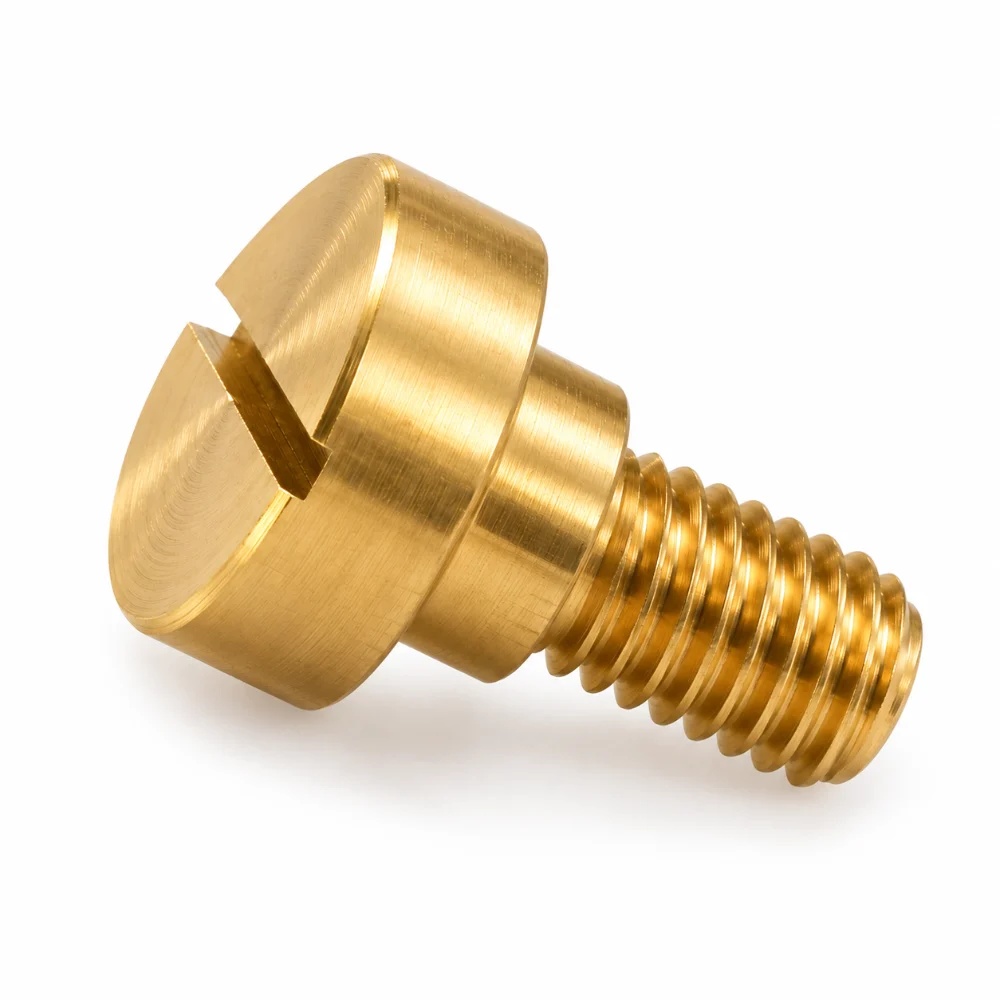
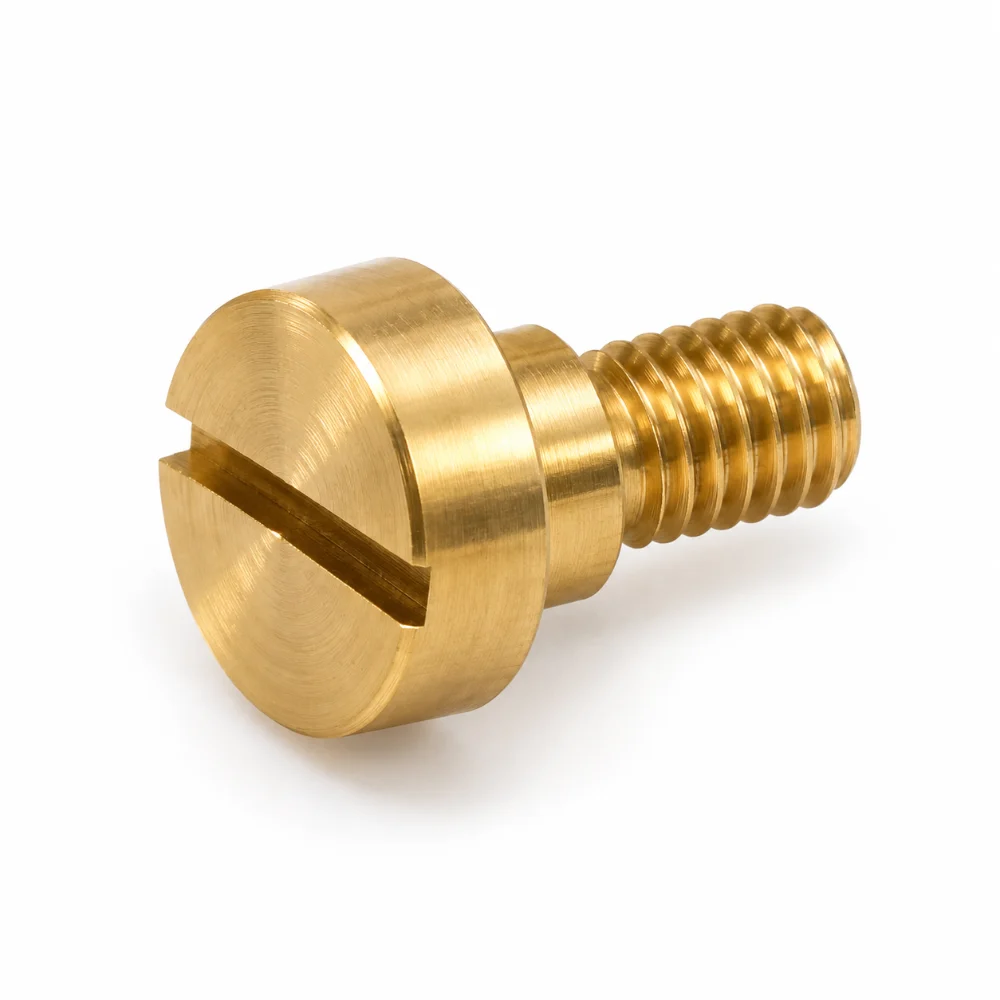
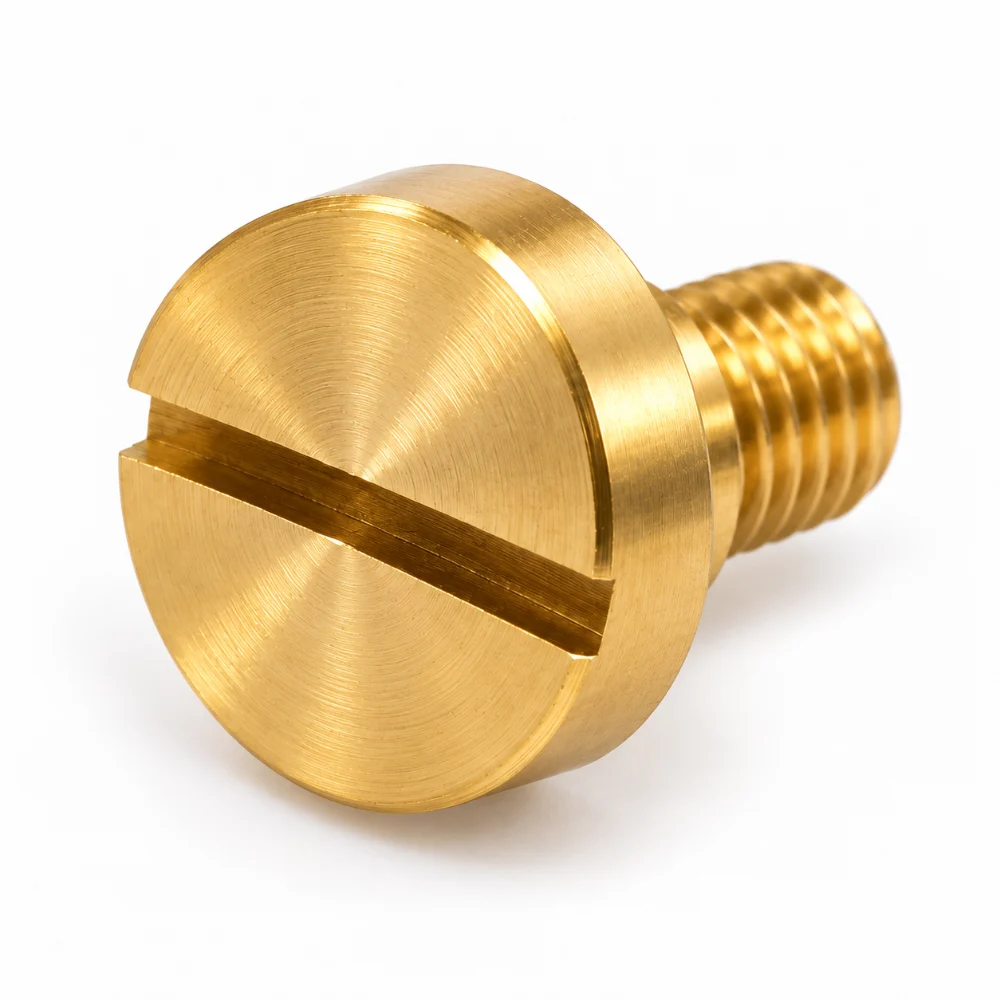


Brass Sealing Screw – Precision CNC Turned C360 Brass Component
This Brass Sealing Screw is a custom precision-machined component designed for threaded fastening and sealing-related mechanical assemblies. Manufactured from C360 brass, it features a slotted head, stepped cylindrical sections, and an external threaded shank, combining multiple functional surfaces within a compact design.
Made from free-machining C360 brass, the component requires accurate CNC turning, controlled external thread machining, and slot cutting. Particular attention is given to the shoulder transitions, head geometry, and threaded section to maintain dimensional consistency and support reliable installation within its intended assembly.
-
Product Name: Brass Sealing Screw
-
Material: C360 Brass
-
Part Number: 202553P004
-
Manufacturing Process: Precision CNC Turning, External Threading and Slot Milling
-
Main Features: Slotted Head, Stepped Shoulder, External Threaded Shank
-
Surface Appearance: Natural Machined Brass
-
Production Type: Custom CNC Turned Brass Component
 Get Free Quote


A Small Screw with Several Critical Interfaces
At first glance, the component resembles a conventional slotted screw. However, its geometry introduces several considerations that are particularly important for sealing-related hardware.
The head provides access for installation using a flat-blade tool. Behind the head, a reduced-diameter cylindrical shoulder separates the driving feature from the threaded section. This stepped arrangement allows different portions of the screw to perform distinct functions within the assembly.
Three areas deserve particular attention:
The slotted head: The screwdriver slot must have a suitable width, depth, and edge condition for the intended driving tool. Excessive burrs or irregular slot edges can interfere with installation.
The shoulder and adjacent faces: The relationship between the shoulder, head, and threaded shank influences how the screw locates and seats against mating components.
The external thread: Thread pitch, diameter, and profile must match the corresponding internal thread to provide proper engagement.
Although designated as a sealing screw, its final sealing performance depends on the complete mating design, including any specified contact surface or separate sealing element.
From Brass Bar Stock to a Finished Slotted Screw
A practical machining strategy for this component begins by establishing the rotational geometry before producing the screwdriver slot.
Establishing the Head and Shoulder Geometry
CNC turning is suitable for producing the circular head, intermediate shoulder, and smaller threaded shank from brass stock.
The transition between these diameters is important because each feature must maintain its intended relationship with the screw axis.
Rather than treating the head as a simple oversized cylinder, the machining operation should account for the shoulder length, adjacent face condition, and dimensional requirements governing the seating geometry.
Producing a Clean External Thread
The external threaded section is machined after establishing the relevant cylindrical diameter.
Suitable threading methods can be selected according to the thread specification and production requirements.
Special attention is needed near the shoulder, where the thread termination must not interfere with the adjacent geometry.
The completed thread should provide proper mating engagement without raised burrs, damaged crests, or unwanted deformation.
Cutting the Screwdriver Slot
The wide straight slot visible across the head is produced through a separate cutting operation, such as CNC milling or precision slotting.
This feature creates a different machining challenge from the rotational surfaces.
Its position must remain appropriately aligned across the head, while the cutting process should avoid raised material along the slot edges.
Controlled deburring is particularly important here. Aggressive edge finishing could unnecessarily change the slot dimensions or disturb the surrounding head surface.
Why the Brass Grade Matters
The specified material is C360 brass, a free-machining copper alloy commonly selected for precision turned components.
C360 offers favorable chip formation and cutting characteristics, making it suitable for producing small threaded parts with multiple stepped diameters.
For this sealing screw, these characteristics are particularly useful when machining the shoulder transitions, external thread, and screwdriver slot.
The component also has the characteristic golden appearance of machined brass.
However, the visible appearance should not be confused with a specified decorative coating. Any additional plating, protective finish, or functional surface treatment would need to be defined separately.
Technical Specifications
| Parameter | Specification |
|---|---|
| Product Name | Brass Sealing Screw |
| Drawing Description | SEALING SCREW |
| Part Number | 202553P004 |
| Material | C360 Brass |
| Primary Process | Precision CNC Turning |
| Secondary Operations | External Threading and Head Slot Cutting |
| Head Design | Circular Slotted Head |
| Body Configuration | Stepped Shoulder and Threaded Shank |
| Thread Type | External Thread, Size Per Full Drawing |
| Four-Place Decimal Tolerance | ±0.002″ (Verify Against Original Drawing) |
| Three-Place Decimal Tolerance | ±0.005″ |
| Two-Place Decimal Tolerance | ±0.010″ |
| Angular Tolerance | ±1° |
| Surface Appearance | Natural Machined Brass |
| Additional Coating | Not Specified in Available Drawing |
| Drawing Revision | Rev. 0 |
| Manufacturing Type | Custom CNC Turned Part |
Note: The available drawing excerpt identifies the material, part number, and general tolerances. Individual thread dimensions, head diameter, overall length, and any sealing-specific requirements must be confirmed using the complete drawing. General tolerances apply only where individual dimensions do not specify otherwise.
Inspection Priorities for a Brass Sealing Screw
For this component, inspection is most useful when organized around the way the screw engages with its mating assembly.
Thread Engagement
The external thread should be checked using suitable dimensional measurements and thread gauges appropriate to the specified thread form. Thread condition is important because damage near the start or end may interfere with assembly.
Head and Shoulder Geometry
The head diameter, shoulder dimensions, and relevant face relationships require verification against the engineering drawing. The screw should seat as intended without interference from unintended steps or burrs.
Driver Slot Condition
The slot should be checked for width, depth, position, and visible edge defects. These characteristics influence tool engagement during installation and removal.
Machined Surface Condition
The brass surfaces should be examined for handling marks, excessive burrs, and other imperfections relevant to the specified functional requirements.
If a particular face serves as the sealing interface, its dimensional and surface requirements should be inspected according to the mating assembly design rather than assuming that an ordinary machined finish is sufficient.
Applications of Custom Brass Sealing Screws
Slotted brass screws with threaded shanks and stepped shoulders may be used in different forms of mechanical equipment.
Potential applications include threaded access closures, serviceable mechanical fittings, instrument housings, and specialized industrial fastening assemblies.
C360 brass can be advantageous for components requiring good machinability, clearly defined threaded geometry, and a compact mechanical form.
Nevertheless, operating pressure, temperature, fluid compatibility, tightening torque, and actual sealing performance depend on the complete assembly specification. These properties cannot be established from the screw geometry alone.
Custom Manufacturing Considerations
The defining feature of this project is not simply that the screw can be produced on a CNC lathe.
It is the combination of rotational machining and a secondary slot-cutting operation, together with the need to preserve the functional relationship between the head, shoulder, and threaded shank.
For similar custom brass components, Karry Precision can evaluate turning strategies, external thread production, secondary milling requirements, and drawing-based inspection plans.
Material specifications, feature dimensions, and production quantities can be reviewed to determine an appropriate manufacturing approach.
Frequently Asked Questions
1. What is a Brass Sealing Screw?
A Brass Sealing Screw is a threaded component intended for fastening or sealing-related assemblies. Depending on the design, it may include a slotted head, stepped shoulder, and machined surfaces that interact with mating components.
2. Why is C360 brass used for sealing screws?
C360 brass is known for its excellent machinability. It is suitable for precision turning, external threading, and secondary machining, making it a practical material for customized threaded mechanical components.
3. How is the slot machined into a brass screw head?
A screwdriver slot can be produced using CNC milling, slotting, or another suitable precision cutting process. Its dimensions and edge condition should follow the specified driving-tool requirements.
4. Does a brass sealing screw require a gasket?
Not necessarily. The sealing method depends on the complete assembly design. Some applications use a dedicated sealing element, while others rely on specified contact geometry. The screw alone does not establish which method is used.
5. Can Brass Sealing Screws be manufactured with custom threads and dimensions?
Yes. Thread profiles, head dimensions, shoulder geometry, and slot configurations can be evaluated for custom CNC machining according to the required drawings, tolerances, and production volume.