
 Contact Us
 Home / /
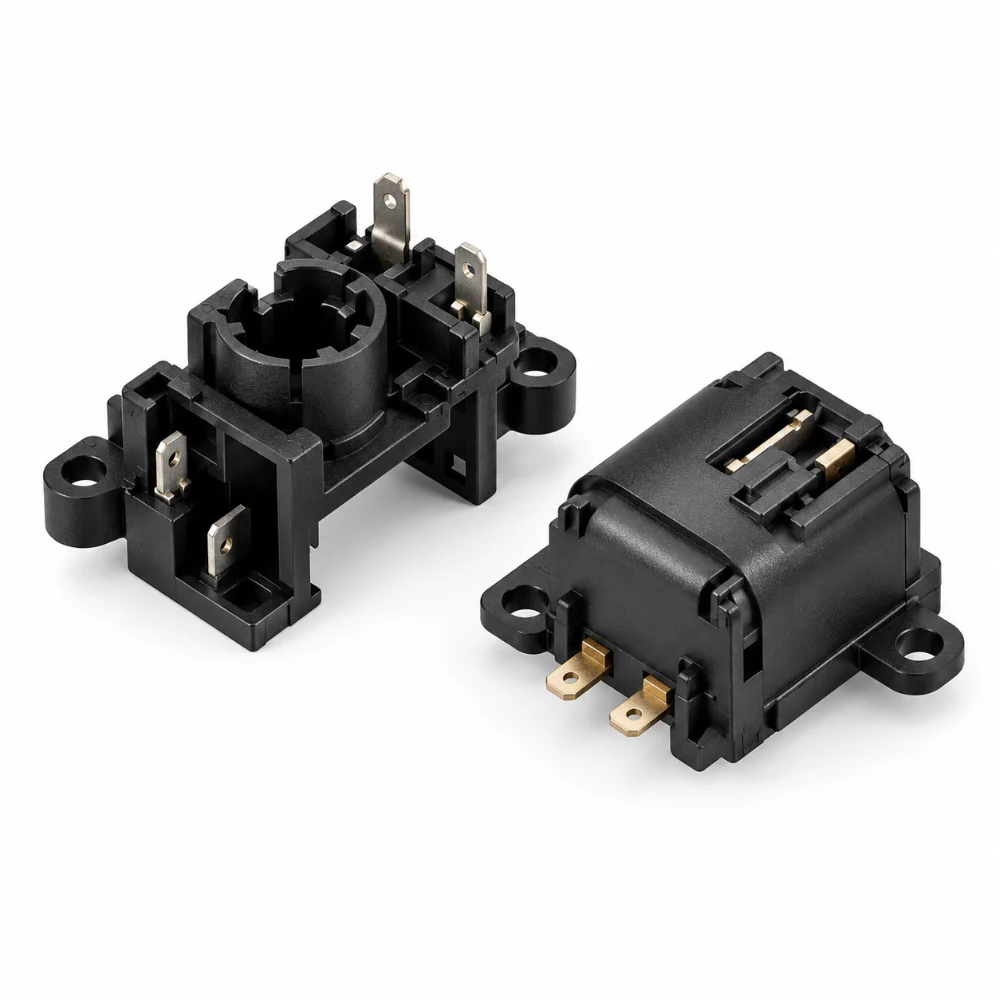


Custom Insert Molded Motor Housing with Metal Terminals
This custom insert molded motor housing combines engineered plastic with embedded metal terminals to create a compact, assembly-ready electronic component. Manufactured through precision insert injection molding, the housing features integrated mounting points, internal cavities, and positioning structures for secure component installation. Karry Precision supports customized housing designs for micro motors, solenoids, and electromechanical devices, focusing on terminal alignment, dimensional consistency, and reliable integration with surrounding assemblies.
-
Product Type: Custom Insert Molded Electronic Housing
-
Manufacturing Process: Precision Insert Injection Molding
-
Material Options: Glass-Fiber-Reinforced PA6 / Modified ABS
-
Embedded Inserts: Metal Electrical Terminals
-
Surface Finish: Black Matte Molded Surface
-
Dimensional Tolerance: Based on Approved Engineering Drawings
-
Structural Features: Motor Cavity, Mounting Holes, Positioning Clips
-
Production Services: Mold Development, Prototype Trials & Mass Production
-
Applications: Micro Motors, Solenoid Valves, Electronic Actuators & Compact Electrical Devices
 Get Free Quote


Manufacturing electronic motor housings with embedded metal terminals requires careful coordination between plastic flow, insert positioning, and part geometry. Unlike conventional injection-molded components, these housings must accommodate conductive inserts while maintaining the dimensional relationships needed for subsequent assembly.
Karry Precision supports custom insert molding projects through mold design, material selection, and controlled manufacturing processes. The focus is on producing functional housings with properly positioned terminals, accurately formed cavities, and mounting features suited to the intended electronic application.
How the Insert Molding Process Works
The production of terminal-integrated motor housings involves several coordinated stages:
- Component and Mold Design: Evaluate internal cavities, metal insert geometry, wall thickness, and mounting features to establish a suitable mold structure.
- Insert Preparation: Inspect and position metal terminals using dedicated locating features to maintain their orientation during molding.
- Plastic Injection: Inject the selected engineering plastic around the positioned inserts while controlling material flow, temperature, and injection pressure.
- Cooling and Part Removal: Allow the molded housing to solidify before carefully removing it from the tool to avoid damaging embedded terminals.
- Finishing and Inspection: Remove unnecessary flash or gate residues where required, and inspect critical dimensions, terminal locations, and molded surfaces.
Proper process control helps reduce common defects such as insert displacement, uneven shrinkage, incomplete filling, and dimensional variation.
Applications of Insert Molded Motor Housings
Micro Motor Assemblies
Compact electric motors may require plastic housings with integrated terminal connections, mounting points, and internal positioning structures. Insert molding allows these functional features to be incorporated into a single component.
Industrial Electromechanical Equipment
Insert molded housings can be used in selected solenoid mechanisms, actuator assemblies, and electrically driven equipment where metal contacts and plastic support structures need to be integrated.
Automotive Electronic Components
Potential applications include small motor modules, positioning devices, and electronic actuator components. Material selection and design verification must account for the specific automotive operating environment.
Compact Electronic Devices
Custom molded components may also be used in electronic control equipment, smart devices, and specialized electrical assemblies requiring precise internal geometry and secure terminal placement.
Design Advantages of Metal Insert Molding
Reduced Component Assembly
Integrating preformed metal terminals into the plastic housing may eliminate certain secondary installation operations and reduce the number of separately handled components.
Improved Terminal Positioning
Dedicated mold features help maintain the relationship between conductive terminals and the surrounding housing, supporting consistent component alignment.
Flexible Structural Integration
Mounting holes, internal supports, alignment ribs, and positioning clips can be incorporated into the molded design when manufacturing conditions permit.
Material Selection Flexibility
Engineering plastics can be selected based on stiffness, electrical insulation, thermal exposure, surface appearance, and dimensional stability requirements.
Repeatable Production
Once the tooling and molding parameters are validated, the process can support repeat manufacturing of components with consistent functional geometry.
Technical Specifications and Quality Requirements
| Parameter | Description |
|---|---|
| Component Name | Custom Insert Molded Motor Housing |
| Primary Manufacturing Method | Precision Metal Insert Injection Molding |
| Base Material | ABS Engineering Plastic |
| Alternative Materials | Reinforced PA6 or Other Suitable Engineering Plastics |
| Integrated Inserts | Metal Electrical Terminals |
| Housing Design | Internal Motor Cavity with Mounting and Positioning Features |
| Surface Appearance | Black Matte Molded Finish |
| Dimensional Requirements | According to Approved Engineering Drawings |
| Insert Retention | Evaluated According to Terminal Design and Specified Loads |
| Electrical Insulation | Material- and Application-Specific Verification |
| Operating Temperature | Determined by Selected Resin Grade and Device Requirements |
| Production Support | Custom Tooling, Trial Molding, Batch Production |
Final material properties, dimensional tolerances, terminal retention performance, and electrical test requirements are confirmed during engineering review.
Manufacturing Quality and Assembly Compatibility
For electronic housings, consistent assembly performance depends on several functional dimensions rather than overall appearance alone.
Karry Precision evaluates critical features such as terminal position, mounting hole geometry, internal cavity clearance, and molded part deformation according to the project requirements.
Where necessary, inspection plans can include dimensional measurement, terminal retention testing, visual inspection, and electrical verification.
These controls help identify potential manufacturing issues before components proceed to subsequent assembly operations.
Custom Electronic Housing Manufacturing Support
Karry Precision provides custom manufacturing support for customers developing plastic housings with integrated metal components.
Our team can review 2D drawings, 3D models, insert specifications, material requirements, and anticipated production quantities to evaluate the appropriate molding approach.
Contact Karry Precision to discuss your insert molding project and request a custom manufacturing quotation.