
 Contact Us
 Home / /
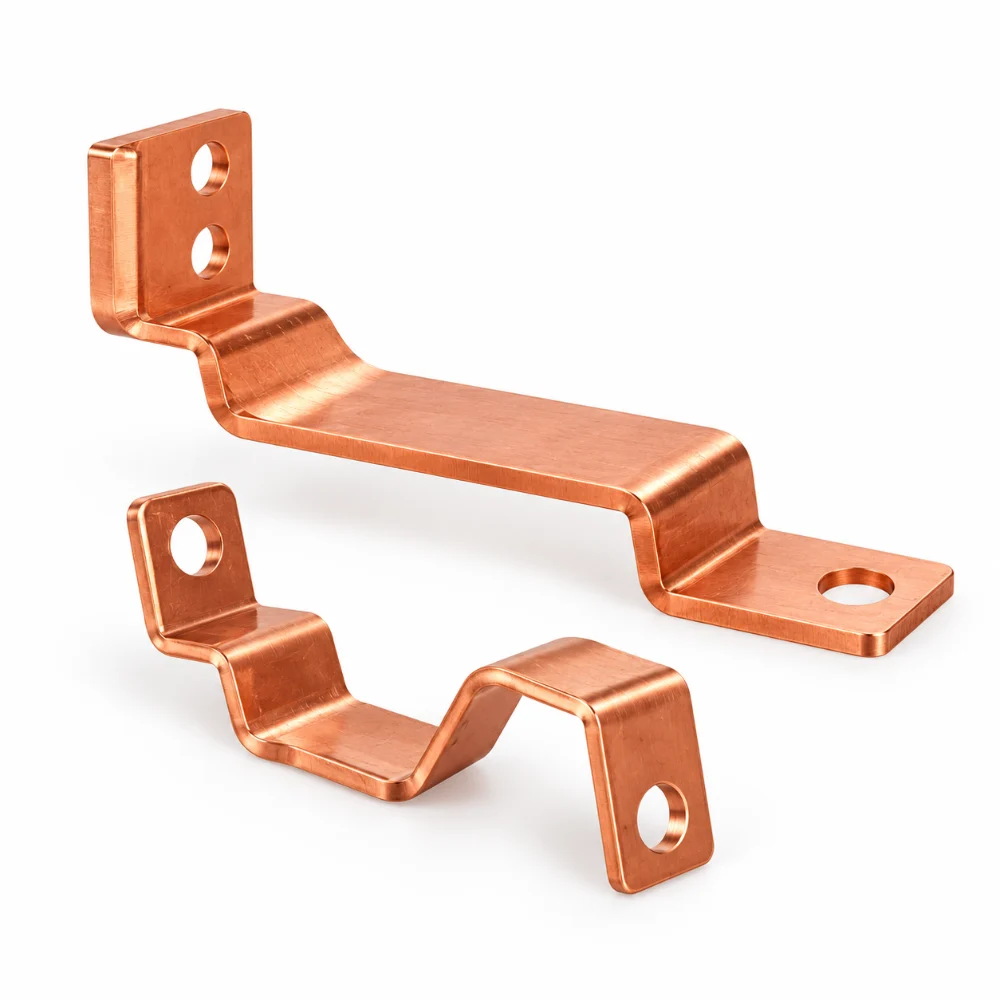


Custom Copper-Aluminum Conductive Bar
-
Product: Custom Copper-Aluminum Conductive Bar
-
Material: Copper-Aluminum Composite (Grade to Be Confirmed)
-
Manufacturing Process: Metal Stamping and Precision Bending
-
Key Features: Formed Profiles and Mounting Holes
-
Tolerance: According to Approved Drawings
-
Dimensions: Customized to Project Requirements
-
Surface Options: Bare Metal or Specified Insulation
-
Applications: Electrical Connections and Power Distribution
 Get Free Quote


Electrical conductive bars often need to connect components positioned at different heights or angles. A simple straight busbar may not fit these configurations, particularly when installation space is limited.
This custom conductive bar design incorporates formed sections and mounting holes to accommodate specific electrical connections. The manufacturing approach focuses on maintaining accurate hole locations, controlled bend geometry, and suitable contact surfaces.
| Manufacturing Parameter | Project Details |
|---|---|
| Product Category | Custom Electrical Conductive Component |
| Material Type | Copper-Aluminum Conductive Material |
| Component Design | Multi-Bend Formed Busbar |
| Processing Methods | Stamping, Hole Forming, Bending |
| Connection Features | Round Mounting Holes |
| Surface Treatment | Project-Specific |
| Dimensional Requirements | Customer Drawing Specifications |
| Production Quantity | According to Customer Requirements |
Precision Stamping and Forming Solution
Producing a conductive bar with multiple bends requires careful consideration of material behavior, tooling clearances, and dimensional accuracy.
Controlled Bending Geometry
Bending sequences and tooling geometry are selected to achieve the required profile while minimizing cracking, excessive deformation, or damage to the conductive material.
Accurate Connection Holes
Hole diameter and positioning are important for proper mechanical assembly. Stamping tools can be designed to maintain the required mounting geometry.
Material Utilization
Blank dimensions and cutting layouts are evaluated to reduce unnecessary material waste without compromising the final component design.
Customized Manufacturing
Busbar length, width, thickness, mounting features, and forming angles can be adjusted based on customer drawings and manufacturing feasibility.
Explore our Custom Metal Stamping Services for additional manufacturing capabilities.
Surface Finishing and Insulation Options
Depending on the electrical design, conductive bars may be supplied with exposed metal surfaces or specified insulating coatings.
Possible insulation approaches include:
| Insulation Type | Typical Considerations |
|---|---|
| PE Insulation | Electrical isolation and temperature requirements |
| PVC Coating | Coverage of formed profiles and environmental protection |
| Epoxy Powder Coating | Insulation for suitable rigid conductive components |
| PA12 Coating | Protective insulation subject to application requirements |
| PET Insulation | Defined insulation coverage on compatible component shapes |
Coating thickness, dielectric strength, operating temperature, and flame-retardant requirements must be confirmed for the selected material and application.
Learn more about available Surface Finishing Solutions.
Typical Applications
Custom-formed conductive bars can be designed for several electrical and industrial applications.
- Power Distribution Equipment: Conductive connections within compatible distribution assemblies.
- Battery Systems: Electrical interconnections for battery modules and related equipment.
- Industrial Control Panels: Custom connections between electrical components and terminals.
- Renewable Energy Equipment: Conductive components used in selected energy conversion and distribution systems.
- Electrical Machinery: Formed connection bars for equipment with limited installation space.
Each application requires appropriate evaluation of electrical loading, insulation, mechanical support, and installation conditions.