
 Contact Us
 Home / /
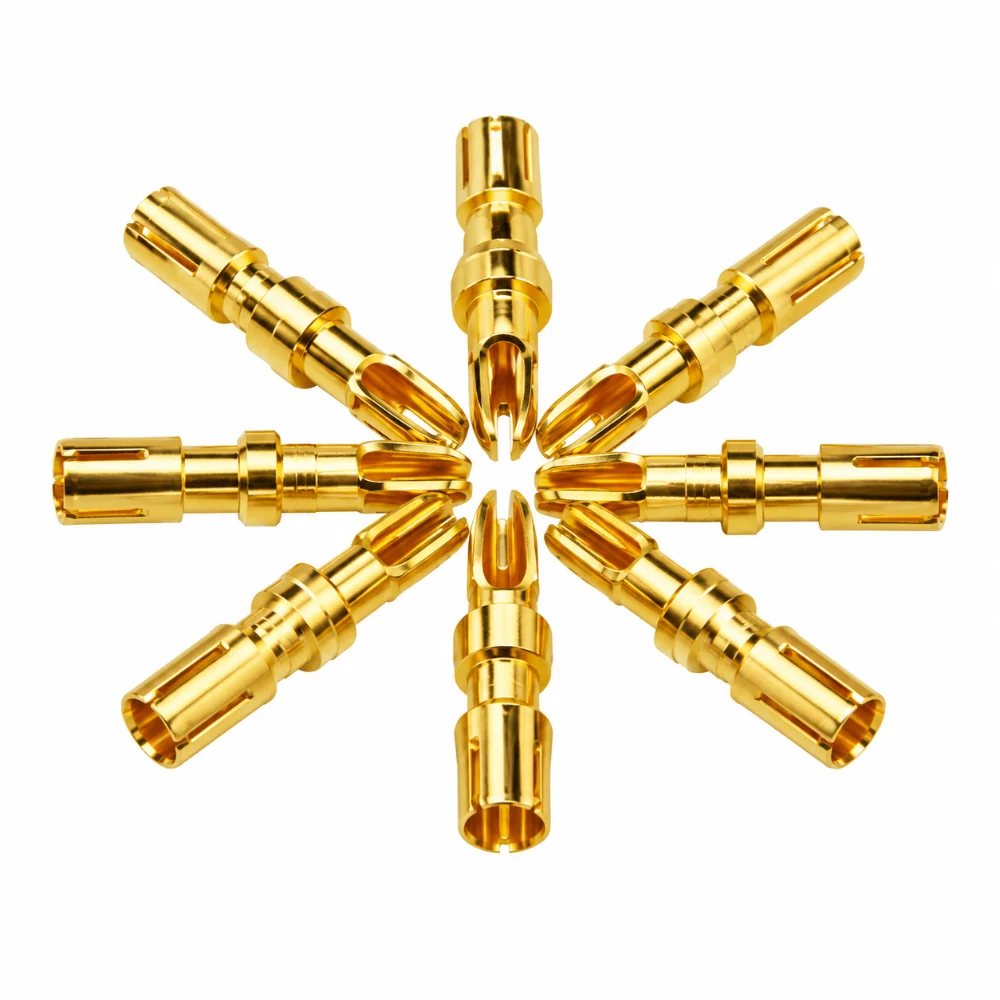


Custom Gold Plated Connector Pins for Electronic Applications
Karry Precision provides custom gold plated connector pins manufactured from precision-machined brass for electronic and electrical assemblies. These components feature stepped cylindrical profiles, contact sections, and optional slotted structures designed to fit specific connector configurations.
By combining CNC turning with controlled surface plating requirements, we support the production of connector components where dimensional fit, surface condition, and contact reliability are essential. Custom geometries and plating specifications can be reviewed according to customer drawings.
-
Product Type: Custom Gold Plated Connector Pins
-
Base Material: C3604 Brass
-
Alternative Materials: Phosphor Bronze / Beryllium Copper
-
Manufacturing Method: Precision CNC Turning
-
Surface Finish: Gold Plating
-
Component Features: Stepped Shafts, Contact Tips and Slotted Sections
-
Plating Thickness: According to Approved Specifications
-
Dimensional Tolerance: Based on Engineering Drawings
-
Production Options: Prototyping and Batch Manufacturing
-
Applications: Electronic Connectors, Signal Contacts and Communication Equipment
 Get Free Quote


Small connector pins must satisfy both mechanical and electrical requirements. Even minor variations in contact diameter, alignment, or surface condition can influence how a pin fits into its mating connector.
For this connector design, the stepped shaft provides different functional sections along the component length. Selected features may support positioning, retention, or electrical contact, depending on the final assembly.
Slotted contact structures may also be incorporated where controlled flexibility is required.
The manufacturing design must consider contact geometry, insertion conditions, surface finish, and the dimensional changes introduced by plating.
CNC Turning of Brass Connector Components
C3604 brass is suitable for producing small turned components with detailed cylindrical features. Its machinability makes it a practical material option for many electrical connector applications.
Typical machining considerations include:
Stepped Diameter Control
Different shaft diameters must maintain the required relationship to mating connector features. Critical dimensions are established according to functional requirements.
Precision Slot Machining
Slots can be introduced into suitable contact geometries when the design requires elastic deformation or additional mechanical engagement.
Smooth Contact Edges
Chamfering and deburring help remove unwanted sharp edges that could affect insertion or damage mating surfaces.
Concentric Feature Alignment
The relationship between contact surfaces and supporting shaft features is important for proper assembly alignment.
These operations can be evaluated through CNC Turning Services based on the component drawing.
Gold Plating for Electrical Contact Surfaces
Gold plating is commonly selected for connector applications because it provides a corrosion-resistant contact surface with good electrical conductivity.
Unlike exposed base metals that may develop insulating corrosion products, a suitable gold finish can help maintain stable electrical contact under specified operating conditions.
However, connector performance depends on the complete material and contact system rather than plating alone.
Important considerations include:
- Coating Thickness: Selected according to contact function, mating cycles, and environmental exposure.
- Surface Preparation: Cleaning and activation support proper adhesion of the plating system.
- Underplating: A suitable barrier layer, such as nickel, may be required by the plating specification.
- Contact Geometry: Proper contact force and mating alignment are necessary for reliable electrical connections.
- Selective Plating: Coating specific functional areas may be evaluated when permitted by the design.
Learn more about available Metal Surface Finishing Options.
Manufacturing and Plating Considerations
The production route is planned around the base material, contact geometry, and approved surface finishing requirements.
- Engineering Review: Evaluate drawings, critical diameters, contact features, and plating specifications.
- CNC Machining: Produce the stepped shaft, contact tip, and required slots or grooves using appropriate turning operations.
- Cleaning and Surface Preparation: Remove machining residues and prepare the metal surfaces for subsequent finishing.
- Gold Plating: Apply the specified plating system under controlled conditions appropriate to the component design.
- Inspection: Evaluate relevant dimensions, coating characteristics, and functional requirements before acceptance.
The exact processing sequence depends on the connector design and specified coating system.
Quality Control for Gold Plated Connector Pins
For precision electrical contacts, surface appearance alone cannot confirm component performance.
Dimensional and coating requirements should be evaluated against the approved technical specification.
| Inspection Item | Quality Requirement |
|---|---|
| Contact Diameter | Verify mating dimensions |
| Shaft Geometry | Check relevant lengths and concentric features |
| Slot Dimensions | Confirm specified width and geometry |
| Gold Plating Thickness | Measure according to the coating specification |
| Surface Condition | Inspect contact surfaces for visible defects |
| Contact Resistance | Test under defined assembly conditions when required |
| Mating Performance | Evaluate insertion force and durability where specified |
Electrical testing, plating thickness reports, and other inspection documentation can be included in the project requirements when agreed during quotation.
Applications of Precision Gold Plated Contacts
Industrial Electronic Connectors
Custom contact pins may be used in industrial control systems, automation modules, and electrical connector assemblies requiring repeatable mating geometry.
Communication Equipment
Machined contacts can be incorporated into selected communication devices, signal interfaces, and connector systems where suitable electrical performance is required.
Electronic Instruments
Precision connector components may support testing devices, measurement equipment, and other electronic instruments that require dependable electrical interfaces.
Consumer Electronic Assemblies
Small machined pins and terminals can be designed for specialized electronic accessories and compact interconnection systems.
Custom Connector Pin Manufacturing at Karry Precision
Karry Precision supports drawing-based manufacturing of brass and copper-alloy components for electronic applications.
Our team can review connector geometry, material selection, machining requirements, plating specifications, and anticipated production quantities before recommending an appropriate manufacturing approach.
For additional information about dimensional requirements, explore our Tolerance and Quality Control capabilities.
| Parameter Item | Technical Specification |
|---|---|
| Product Name | Gold-Plated Connector Pin / Precision Electronic Connector Parts |
| Main Material | C3604 Brass (Phosphor Bronze / Beryllium Copper optional) |
| Manufacturing Process | CNC Turning + Cyanide-Free Precision Gold-Plating Composite Process |
| Gold Plating Thickness | 0.1~1.0μm (Customizable on request) |
| Coating Purity | ≥99.9% |
| Dimensional Tolerance | ±0.005mm |
| Coaxiality Accuracy | ≤0.003mm |
| Surface Roughness | Ra 0.4 (As-turned) / Ra 0.2 (After gold plating) |
| Contact Resistance | ≤10mΩ (After gold plating) |
| Plug-in Life | ≥1000 times (No obvious wear on gold plating) |
| Salt Spray Test | ≥48 hours (Neutral salt spray) |
| Production Capabilities | Prototyping, Low-volume Customization, Mass-volume Production |
| Working Conditions | Signal transmission plug-in, high conductivity and corrosion resistance requirements, normal temperature industrial/electronic environment |